
How to Understand Why God Commanded Gold for the Tabernacle
Quick Summary
God commanded gold for the Tabernacle as a constant element of its structure, found in Exodus 25 and repeated across the instructions for the ark, table, lampstand and framework. Gold was given to the innermost and most sacred furnishings, such as the ark, mercy seat and lampstand, while silver and bronze were used for lower tiers. The text states the command directly, while its deeper symbolism of holiness and divine glory is an interpretation drawn out by later readers.
- Exodus 25 is the starting point, listing gold first among the materials for the freewill offering.
- The ark, mercy seat and lampstand are solid gold, while the table and altar are overlaid with gold.
- The Israelites’ freewill offering was so generous that Moses had to tell the people to stop bringing gold.
- Gold is read as a symbol of holiness and divine glory, but that meaning is interpretive rather than explicit.
- The Golden Calf used the same kind of gold, contrasting an idol with the Tabernacle dedicated to God’s worship.
Table of Contents
- What Exodus 25 Actually Says About the Gold
- Where the Gold for the Tabernacle Came From
- Gold in the Tabernacle Meaning: Holiness, Glory and Divine Presence
- Tabernacle Furnishings Made of Gold, Piece by Piece
- Why Different Materials Were Assigned to Different Parts
- The Golden Calf and the Tabernacle: A Direct Contrast
- Booking Time With My Gold Book to Go Deeper
- Frequently Asked Questions
What Exodus 25 Actually Says About the Gold
Last Updated: November 6, 2026
Exodus 25 is where the instructions for the Tabernacle begin, and gold appears almost immediately. God tells Moses to collect a freewill offering from the Israelites, and the first material on the list is gold, followed by silver, bronze, and other precious materials. For readers asking why God commanded gold for the Tabernacle, this passage is the starting point, because it states the command directly rather than leaving the reason to be inferred.
The text does not offer a long explanation in that chapter. It lists what is to be made and what it is to be covered with, and gold recurs throughout the instructions for the ark, the table, the lampstand, and the framework of the sanctuary. The repetition itself is worth noticing: gold is not a decorative afterthought but a constant element of the structure.
Where the Gold for the Tabernacle Came From
Exodus 12 describes the Israelites leaving Egypt with gold and silver obtained from their Egyptian neighbors, which is one part of the answer. Scholars and commentators differ on how to read that transfer, but the passage is consistent in describing the material as coming out of Egypt before the wilderness journey.
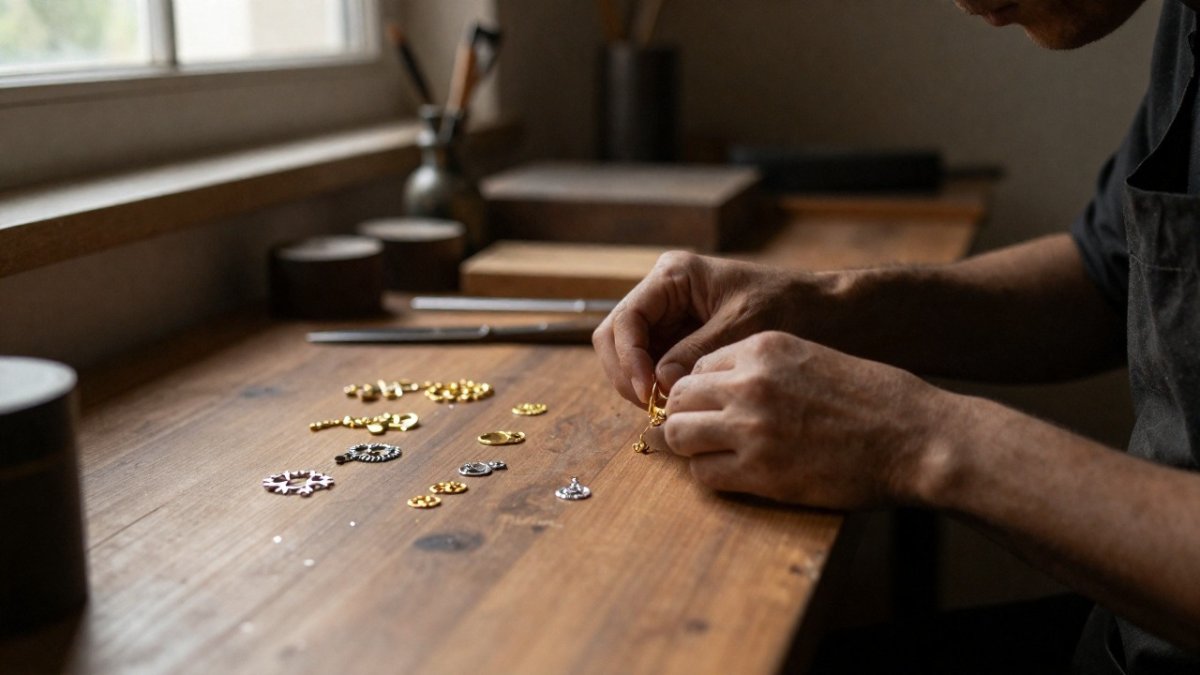
The freewill offering in Exodus 25 then asked the people to contribute from what they carried. The text describes willing hearts bringing offerings, and Exodus 35 records the response in detail, with people bringing gold jewelry and other items until Moses had to tell them to stop. That detail is one of the clearest pieces of textual evidence for the scale of the contribution.
Gold in the Tabernacle Meaning: Holiness, Glory and Divine Presence
Gold is most often read as a symbol of deity, holiness, and divine glory. Its brightness and resistance to corrosion made it a natural image for what does not decay, and the sanctuary’s gold-covered surfaces point toward the sacred space set apart for God’s presence.
The meaning of gold in the Tabernacle is interpretive, and readers should distinguish it from the explicit instructions. The text commands the gold; the symbolism is drawn out by later readers. Those interpretations commonly connect gold with the holiness of the place where God meets the people, and with the glory associated with the divine presence.
Tabernacle Furnishings Made of Gold, Piece by Piece
A passage-by-passage inventory shows how the command in Exodus 25 was implemented object by object. The table below maps each gold requirement to its specific verse and notes whether the gold was solid or an overlay.
| Furnishing | Passage | Gold Specification |
|---|---|---|
| Ark of the covenant | Exodus 25:10-16 | Overlaid with pure gold inside and out, with a gold molding around it |
| Mercy seat | Exodus 25:17-21 | Made of pure gold, with two hammered gold cherubim at its ends |
| Table of showbread | Exodus 25:23-30 | Overlaid with pure gold, with a gold rim and gold rings for carrying |
| Lampstand (menorah) | Exodus 25:31-40 | Made of pure hammered gold, including its branches, cups, and decorations |
| Altar of incense | Exodus 30:1-10 | Overlaid with pure gold, with gold rings and poles |
| Boards of the tabernacle | Exodus 26:29-30 | Overlaid with gold, with gold rings and gold-covered bars |
| Veil hooks | Exodus 26:32 | Gold hooks for the veil |
| Screen for the door | Exodus 26:36-37 | Gold hooks and gold overlay on the posts |
This inventory reveals a pattern: the most sacred objects (ark, mercy seat, lampstand) are solid gold or pure gold, while larger structural elements (boards, altar) are overlaid. The distinction is not arbitrary, it follows the hierarchy of holiness within the sanctuary, with the innermost space receiving the most precious material.
The Ark, the Mercy Seat and the Cherubim
The ark and its cover form the center of the sanctuary’s furniture. Exodus 25:10-16 specifies that the ark be overlaid with pure gold inside and out, and Exodus 25:17-21 describes the mercy seat as solid gold, with the cherubim formed from the same hammered metal. Because this is where the presence of God is described as meeting the people (Exodus 25:22), the density of gold here is the most direct expression of the command. The text does not explain the symbolism explicitly, but the concentration of solid gold at the point of divine-human encounter is a detail readers can verify directly.
The Lampstand, the Table and the Altar Overlay
The lampstand was made from a single piece of pure gold (Exodus 25:31-40). The table of showbread and the altar of incense were overlaid rather than solid (Exodus 25:23-30; Exodus 30:1-10), a practical difference that appears throughout the instructions. The overlay method gave the furnishings the appearance of gold while using less metal.
Why Different Materials Were Assigned to Different Parts
The instructions do not use gold everywhere. A material hierarchy runs through Exodus 25-30, with each substance assigned to specific parts of the Tabernacle according to the holiness of the space and the function of the object. Understanding this hierarchy explains why gold was commanded for some elements and not others.
- Gold is used for the innermost furnishings and the structures closest to the Holy of Holies: the ark, mercy seat, lampstand, table of showbread, altar of incense, and the boards and bars of the tabernacle itself (Exodus 25-26; Exodus 30).
- Silver appears in the bases of the tabernacle boards (Exodus 26:19-25) and the bases of the veil (Exodus 26:32), marking a tier below gold but still precious.
- Bronze is used for the altar of burnt offering, its grating, and the laver (Exodus 27:1-8; Exodus 30:18), which are located in the outer courtyard where the people gathered.
- Acacia wood forms the core of the ark, table, and altar, overlaid with metal, providing strength and portability.
- Textiles (fine linen, blue, purple, and scarlet yarn) are used for the curtains and screens, with different grades for the innermost and outer areas (Exodus 26).
This gradation is one of the clearest ways the text communicates a hierarchy of holiness through material. The most sacred spaces and objects receive the most precious metal, while the outer and functional elements use more durable or more accessible materials. The pattern is not merely practical, it reinforces the Tabernacle’s role as a structured dwelling place for God’s presence, with increasing restrictions and preciousness as one moves inward.
The Golden Calf and the Tabernacle: A Direct Contrast
Exodus 32 records the Golden Calf, made from gold the people had given. The contrast with the Tabernacle is direct. The same kind of gold, contributed by the same people, is used in one case to make an idol and in the other to build the place where God is to be worshiped.
It shows that the gold itself is not the issue; the difference lies in what the gold is made into and what it is dedicated to. The Tabernacle’s gold is shaped by divine instruction and placed within a prescribed system of worship, while the calf is an unauthorized image.
Many discussions of this passage focus on the sin of the calf alone. Reading it alongside the Tabernacle instructions gives a fuller sense of how the same material can be redirected, which is a useful way to understand why the gold was commanded for that particular purpose.
Booking Time With My Gold Book to Go Deeper
Study of the gold in the Tabernacle can continue beyond the text itself. My Gold Book’s guide, GOLD: The Most Precious of Metals by Douglas Ginter, covers the history of gold, its role in religion and culture, and how it compares with other assets, which can help place the biblical use of gold in a wider context. Readers can explore it through the book-focused gold guide to see what the book covers before deciding whether it fits their study.
Frequently Asked Questions
Why did God command Moses to build a tabernacle?
Exodus 25 presents the tabernacle as a place where God says he will dwell among the Israelites, with the command, “Let them make me a sanctuary, that I may dwell among them” (Exodus 25:8). The text ties the structure to God’s presence and to the covenant relationship already established at Sinai. Readers who want the surrounding context can start with Exodus 25 through 31, which lists the materials, dimensions and furnishings in order. The command itself is stated plainly, and most of the detail that follows explains how the space should be built and used for worship.
Where did the gold for the tabernacle come from?
The text says the gold came from freewill offerings made by the Israelites. Exodus 25:2 instructs Moses to receive a contribution from everyone whose heart moves them to give. Earlier, in Exodus 12:35-36, the Israelites had received gold and silver from the Egyptians before leaving Egypt. Scholars differ on how these two sources relate, and the text does not give a full accounting of the total amount. Looking at both passages side by side gives the clearest picture of the materials’ origin.
What did gold symbolize in the tabernacle?
Gold is associated with holiness, divine glory and the presence of God in the biblical text. Its use on the ark, the lampstand and the altar overlay marks these objects as belonging to sacred space. Interpreters often connect gold with purity and value, though the text itself does not spell out one fixed symbolic system. Reading gold alongside other materials like bronze, silver and acacia wood shows how the furnishings were arranged to express different aspects of worship.
How does the golden calf relate to the tabernacle?
The golden calf in Exodus 32 is made from gold jewelry given by the people while Moses is on Sinai. The tabernacle commands in Exodus 25 through 31 are given before the calf episode, and the tabernacle is later built according to the pattern God gave. Many readers see a deliberate contrast: the same material that was used to make an idol is directed toward a structure meant for true worship. The connection is interpretive, and the text invites comparison without stating a single conclusion.
