
Best Ways to Store Gold at Home Safely
Last Updated: November 19, 2026
Quick Summary
The safest way to store gold at home is in a bolted, rated safe placed somewhere hard to access, and only for the amount you could replace comfortably. Keep the rest in a vault where it can be professionally insured. Check the safe’s UL burglary rating, its fire and water protection, and how it is anchored before you buy.
- Keep only what you could replace comfortably at home and store the rest in a vault.
- TL-15 and TL-30 are higher-security burglary ratings than residential units, but they cost more.
- UL fire ratings measure interior temperature, not how long the safe survives a fire.
- Most residential safes are not watertight, so use a gasketed door or store gold above flood level.
- Confirm in writing how your policy covers precious metals, since some exclude bullion or cap coverage.
Table of Contents
- How Much Gold Is Worth Keeping at Home
- Home Safe vs Bank Safe Deposit Box: Which Fits Your Situation
- Choosing the Best Home Safe for Gold
- How to Keep Gold Safe at Home from Thieves
- Hiding Places for Gold: Concealment Options and Their Limits
- How to Store Gold at Home Long Term
- Insurance, Documentation, and Your Next Step with Gold at Home
- Frequently Asked Questions
How Much Gold Is Worth Keeping at Home
Deciding how much gold to keep at home comes down to a simple question: what would you lose if it disappeared? Anyone who wants to store gold at home should start from that answer. A practical starting point is to keep only what you could replace comfortably and what you need to reach quickly, and to store the rest where it can be professionally insured and monitored.
Think in layers. Your everyday holdings, such as a few coins or small bars, can live at home in a secure container. Larger positions may be better suited to a vault, where a custodian can provide insurance and access controls. Revisit the split once a year, or whenever your overall gold position changes meaningfully.
Home Safe vs Bank Safe Deposit Box: Which Fits Your Situation
A home safe gives you immediate access at any hour. You can check on your gold, move it, or sell a piece without waiting for a bank to open. The trade-off is that the risk sits with you: a burglary, a fire or a flood can take your holdings, and home insurance often caps coverage for precious metals.
A bank safe deposit box offers different protections. Access is generally limited to banking hours, and bank policies on insuring the contents vary, so you should confirm coverage in writing. Check the current terms with your bank before relying on either option.
Choosing the Best Home Safe for Gold
A safe is only as good as its rating, its anchoring, and where you put it. Treat those three as a checklist rather than shopping by brand or door thickness.
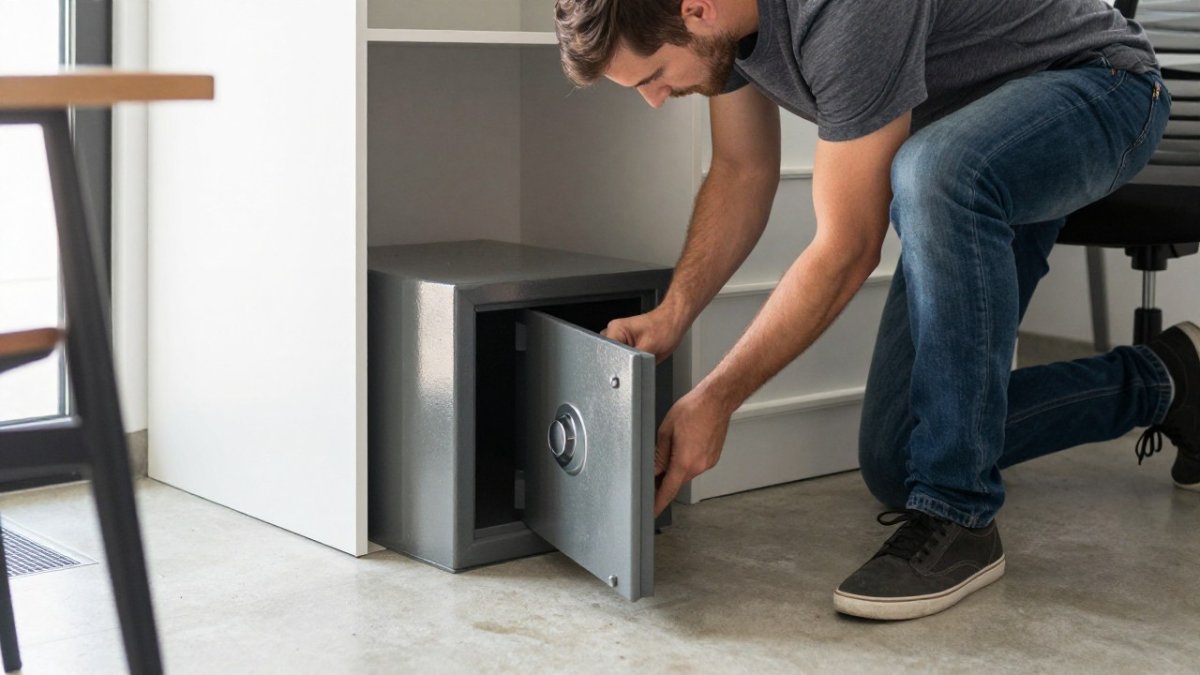
Start with the burglary rating. In the United States, Underwriters Laboratories (UL) publishes residential and commercial burglary ratings, commonly labeled RSC (Residential Security Container) and TL-15 or TL-30 for higher-security units. TL-rated safes are built for longer resistance than residential-rated units and are generally heavier and more expensive. Match the rating to the value inside, and check the current UL listing before buying.
Check the fire rating separately. UL fire ratings describe the interior temperature the safe maintains during a fire test, not how long the safe survives (Turning Up the Heat: A Sneak Peek into UL’s Fire Testing of Safes). Fire ratings and burglary ratings are independent, a safe can be strong against theft and weak against fire, or the reverse.
Ask about water protection. Most residential safes are not watertight. If your storage area is a basement or anywhere flood-prone, look for a gasketed door and a documented water-resistance claim, or plan to store the gold above the expected flood line.
Anchor it, and anchor it properly. A heavy safe is not a fixed safe. Confirm with the manufacturer how the safe should be anchored, and make sure the fasteners are rated for its weight. If you rent, get written permission before drilling.
Place it where it is hard to work on. A safe in a dark, cramped corner with limited swing room for tools is harder to attack than one in an open garage. Keep it out of direct view from windows and doors, and avoid placing it against an exterior wall where a thief could pry from outside.
Size for growth and for handling. Buy an interior that holds your current gold plus a reasonable margin, with adjustable shelves or padded compartments so coins and bars do not scratch each other. Confirm the lock type, keypad, key, combination, or biometric, and decide who else needs access. Mechanical combination locks avoid battery failure; electronic locks add audit and time-delay features but depend on power.
Consider professional installation. A heavy safe is difficult to move without equipment and can damage floors or walls. Ask any installer about their experience with your safe model and get the anchoring method in writing.
The article points to a safe’s burglary rating, fire rating, water protection and anchoring as the key checks.
| Feature | What to check | Key point |
|---|---|---|
| Burglary rating | UL RSC, TL-15 or TL-30 | TL-rated safes resist longer but cost more |
| Fire rating | UL fire rating | Measures interior temperature, not survival time |
| Water protection | Gasketed door, water-resistance claim | Most residential safes are not watertight |
| Anchoring | Manufacturer method, rated fasteners | A heavy safe is not fixed until anchored |
| Placement | Hard to work on, out of view | Avoid exterior walls and open garages |
| Lock type | Keypad, key, combination, biometric | Mechanical locks avoid battery failure |
How to Keep Gold Safe at Home from Thieves
Privacy is one of the strongest defenses. Tell as few people as possible where your gold is kept, and never discuss holdings with visitors, contractors or acquaintances. Most thefts depend on the thief knowing the gold exists.
Place the safe where it is not obvious. A bolted safe in a closet or utility room is harder to find than one in a bedroom. Keep the door closed when you are not using it, and avoid moving gold in view of a window or a camera you do not control. Review your home security setup, including locks and alarms, since a safe only adds to those measures.
Hiding Places for Gold: Concealment Options and Their Limits
Concealment, such as a loose floorboard, a fake wall outlet or a book hollowed out for storage, has real limits. A concealed space offers little protection against a determined search, and it offers no protection against fire or water.
Use hiding places only as a supplement to a proper safe, never as a replacement. A small reserve hidden in a less obvious place can work for an emergency cache, provided you do not rely on it to protect a large holding. Remember that you must also be able to find it, so write down the location in a secure place.
How to Store Gold at Home Long Term
Long-term storage depends on protecting the gold from the environment as much as from people. Keep it in a dry, temperature-stable area, away from damp basements, attics and direct heat. Moisture can cause corrosion on coins that are not sealed, so store them in airtight, labeled capsules or sleeves.
Handle gold as little as possible. Each touch can leave marks or oils on the surface, which can lower a coin’s collector value. Wear clean cotton gloves when you must handle pieces, and keep packaging and certificates together with the item. Inspect your stash once or twice a year to check for moisture, damage or loose fittings.
Insurance, Documentation, and Your Next Step with Gold at Home
Insurance is where most home storage plans quietly fail. Standard homeowners and renters policies may treat precious metals as a category with a low sublimit, and some may exclude bullion entirely. The practical move is to find out in writing what your policy actually covers before you need it.
Understand the three coverage paths. The first is the base policy, which may cover gold only up to a small sublimit and may require a separate endorsement. The second is a scheduled personal property endorsement (often called a rider), which lists specific items and their values and usually covers theft, loss, and damage without a deductible. The third is a standalone valuable-items or collectibles policy, which is common for larger holdings and may require an appraisal. Ask your insurer which path applies to bullion, coins, and graded pieces separately, because the treatment often differs.
Get the exclusions in writing. Policies may contain exclusions, and some may require that gold be kept in a safe or vault to qualify for coverage. Read the exclusions carefully. Ask specifically whether home storage changes your premium or your coverage terms.
Build a documentation file before you need it. A claims adjuster will ask for proof of ownership and value. A practical file includes:
- Purchase receipts and invoices showing date, dealer, weight, purity, and price.
- Photographs of each item, front and back, with a scale reference.
- Serial numbers where they exist, and assay certificates for bars.
- A written inventory listing type, weight, purity, quantity, and storage location (kept separately from the gold).
- Appraisals for collectible or graded coins, refreshed periodically.
- A copy of the safe’s rating and installation record, if your policy requires secure storage.
Store one copy off-site, with a trusted family member, in a safe deposit box, or in an encrypted cloud folder, and keep the inventory updated after every purchase or sale.
Prepare for the claim before it happens. Confirm the claims deadline and the documentation your insurer requires, and ask whether they accept photographs and receipts in place of a professional appraisal. If your holdings exceed the base sublimit, raise the coverage or move part of the holding to a vault where the custodian carries the insurance.
Revisit the plan annually. Gold prices move, and so do policy limits. Once a year, compare your inventory value to your coverage, confirm the exclusions still fit your situation, and decide whether to keep the split between home and vault. Set a calendar reminder and note the date of your last review in the documentation file.
Ready to learn more? My Gold Book, authored by Douglas Ginter, covers the history, supply and demand, and economic role of gold, and compares it with silver and Bitcoin. It gives beginners and experienced readers a balanced way to decide how much gold belongs in their plan. Click Here To Order Your Copy.
Frequently Asked Questions
What is the safest way to store gold at home?
The safest approach combines a quality fireproof and burglary-rated home safe, bolted to the structure of the house, with a concealed location that few people know about. Keep only the amount you can afford to lose to theft or damage at home, and store the rest in a bank safe deposit box or a private vault. Store coins and bars in their original packaging or in individual sleeves so they are easy to count and inspect. Check the safe’s rating and keep an updated inventory with photos and serial numbers in a separate location.
Is a bank safe deposit box safer than storing gold at home?
A bank safe deposit box is generally harder for a burglar to access than a home safe, but it comes with its own limits. Box contents may not be insured by the bank, so confirm whether separate coverage is needed, and access depends on bank hours and identification. Home storage offers fast, private access but depends entirely on the safe, its anchoring, and how few people know it exists. Many owners split holdings between the two, keeping a small working amount at home and the rest in the box.
Does homeowners insurance cover gold stored at home?
Many standard homeowners policies include only limited coverage for valuables such as gold, often with low per-item and total sublimits. Theft from a home may require forced entry, and some policies exclude losses from unlocked or unsecured areas. A personal property endorsement or scheduled valuables rider can increase coverage for precious metals. Keep receipts, photos, weights, and serial numbers, and review the policy with your agent before storing a significant amount.
