
Amplify Publishing Alternatives: 10 Hybrid Publishers Compared
Table of Contents
- What Makes a Strong Hybrid Publishing Alternative
- Hybrid Publishing vs Self-Publishing: Key Differences
- Top 10 Hybrid Publishers as Amplify Alternatives
- 1. BookBaby: All-in-One Publishing Packages
- 2. AuthorHouse: Tiered Services with Marketing Support
- 3. Forefront Books: Distribution Through Simon & Schuster
- 4. Atmosphere Press: Transparent Pricing and Author Rights
- 5. Greenleaf Book Group: Thought Leadership Focus
- 6. She Writes Press: Dedicated to Women Authors
- 7. Manhattan Book Group: Guaranteed Bestseller Status
- 8. Phoenix Ghostwriting: Full-Service Writing and Publishing
- 9. Lulu: Budget-Friendly Print-on-Demand
- Cost of Hybrid Publishing Services Explained
- Hybrid Publishing Contract Red Flags to Watch
- How to Evaluate and Select the Right Publisher
- Frequently Asked Questions
Last Updated: September 3, 2026
What Makes a Strong Hybrid Publishing Alternative
Hybrid publishing sits between traditional publishing (where the publisher covers costs but controls everything) and self-publishing (where you control everything but shoulder all costs). The best hybrid alternatives invest in your book’s quality while letting you retain meaningful control and a fair share of profits.
A strong hybrid publisher delivers on three fronts: professional editorial and production quality that competes with traditionally published books; distribution reach into bookstores, Amazon, libraries, and readers’ hands; and transparent, author-friendly terms with clear pricing and royalty percentages.
Hybrid Publishing vs Self-Publishing: Key Differences
In self-publishing, you retain 100% control and profits after costs. You hire freelancers for editing, design, and formatting, then upload to platforms like Amazon KDP or IngramSpark. You handle all marketing. The upside: complete control and maximum royalties. The downside: you manage multiple vendors and your book likely won’t reach physical bookstores.
Hybrid publishing flips the model. The publisher invests in production, hires the editor and designer, handles ISBN registration and distribution to major retailers, and provides marketing guidance. You retain more control than traditional publishing but less than self-publishing. Your book gets professional treatment and wider distribution in exchange for a percentage of sales or upfront fees.
The real cost difference is distribution and legitimacy. A hybrid publisher with bookstore relationships can place your book in retail locations a self-published author cannot reach. Choose hybrid if you value professional production and retail distribution over maximum profit margins. Choose self-publishing if you’re comfortable managing vendors and prioritize keeping every dollar.
Top 10 Hybrid Publishers as Amplify Alternatives
1. BookBaby: All-in-One Publishing Packages
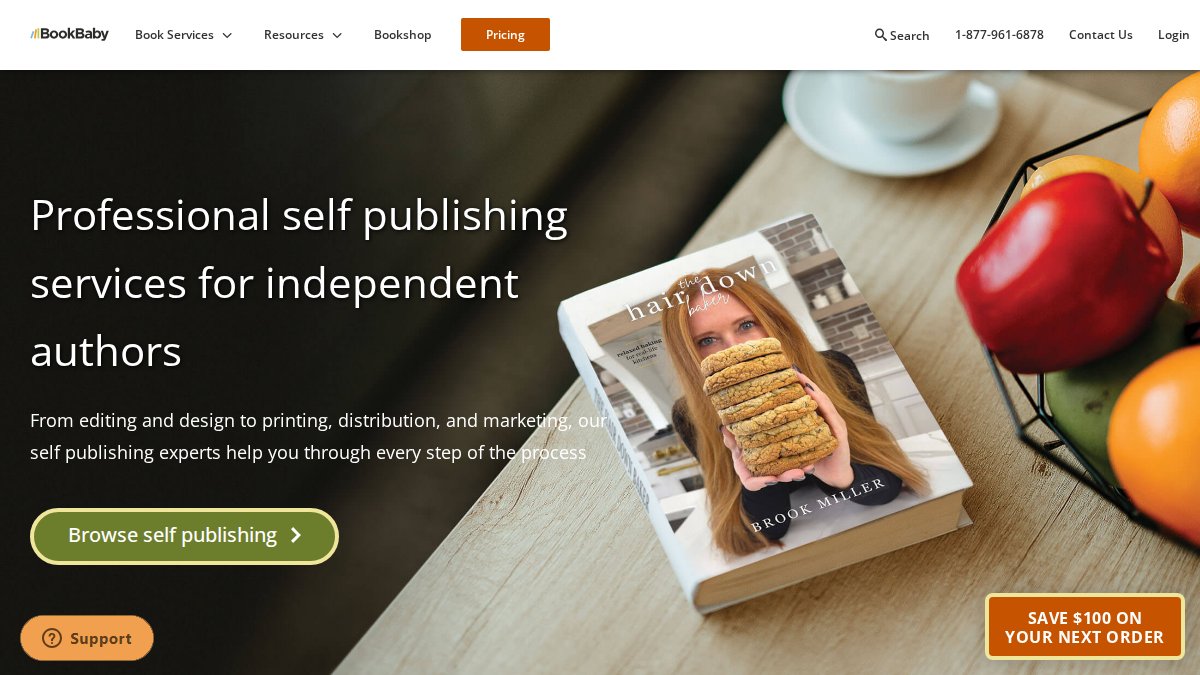
BookBaby offers tiered packages combining editing, cover design, formatting, and distribution into single products. The eBook package starts at $399; print packages include in-house printing for quality control. Distribution reaches Amazon, Apple Books, Google Play, and 40+ other retailers globally.
Best for: Authors wanting straightforward, transparent processes without custom quotes.
Pros:
- Transparent, package-based pricing
- In-house printing ensures quality control
- Global distribution to 40+ retailers
Cons:
- Professional editing is an add-on
- Minimal marketing support unless upgraded
2. AuthorHouse: Tiered Services with Marketing Support
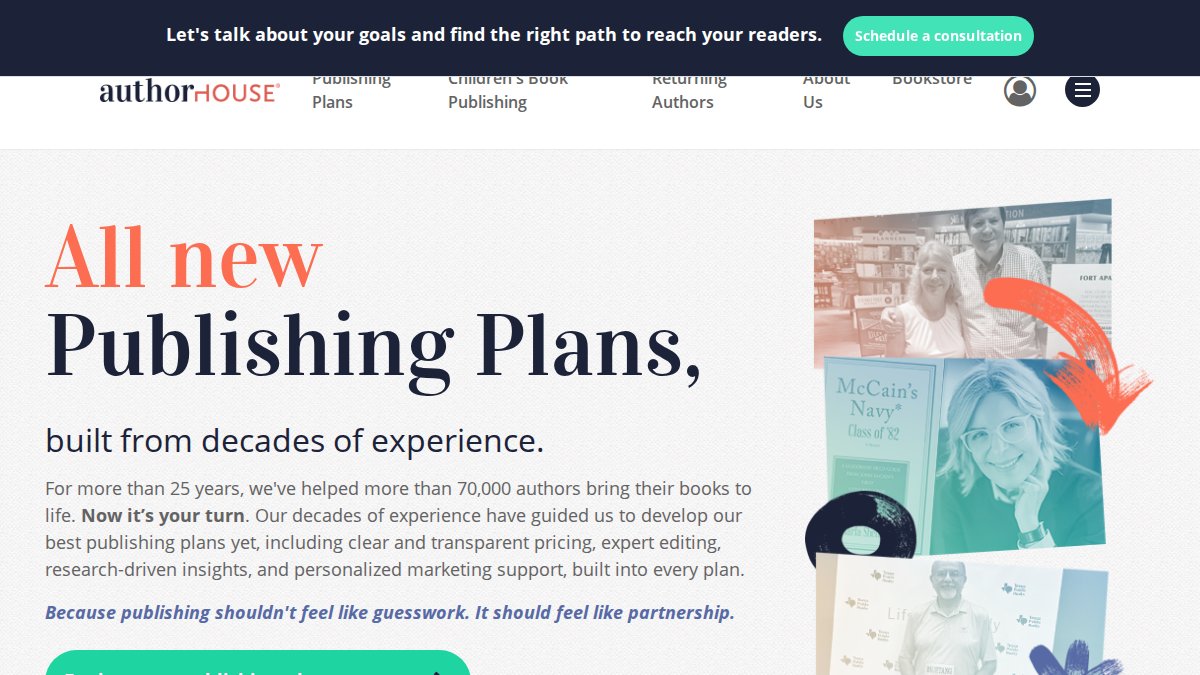
AuthorHouse has published over 96,000 books with Essentials ($1,499), Plus, and Premium tiers (authorhouse.com). Higher tiers add professional editing, marketing consultation, and promotional tools. Distribution includes major retailers and print-on-demand options.
Best for: Authors comfortable with tiered approaches and willing to invest in marketing support.
Pros:
- Extensive experience with 96,000+ published titles
- Tiered structure provides clear service levels
- Marketing education included in higher tiers
Cons:
- Base pricing inflates significantly with add-ons
- Aggressive upselling reported
3. Forefront Books: Distribution Through Simon & Schuster
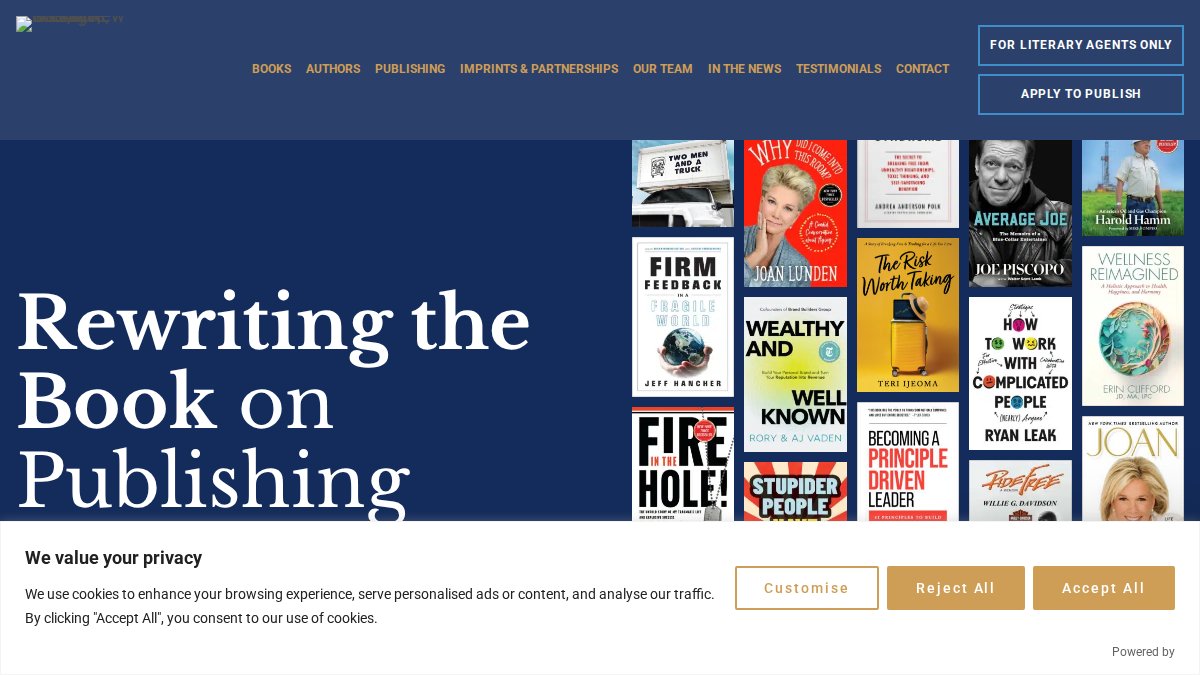
Forefront Books partners with Simon & Schuster for distribution, opening doors to physical bookstore placement most hybrid publishers cannot guarantee. They handle professional editing, production, and PR/marketing campaigns with tailored strategies. Pricing requires a custom quote.
Best for: Authors with strong manuscripts seeking premium production and Simon & Schuster distribution.
Pros:
- Simon & Schuster distribution for retail bookstore placement
- Professional PR and marketing campaigns
- Editorial team provides quality control
Cons:
- Pricing not transparent; requires custom quotes
- Selective acceptance process
4. Atmosphere Press: Transparent Pricing and Author Rights
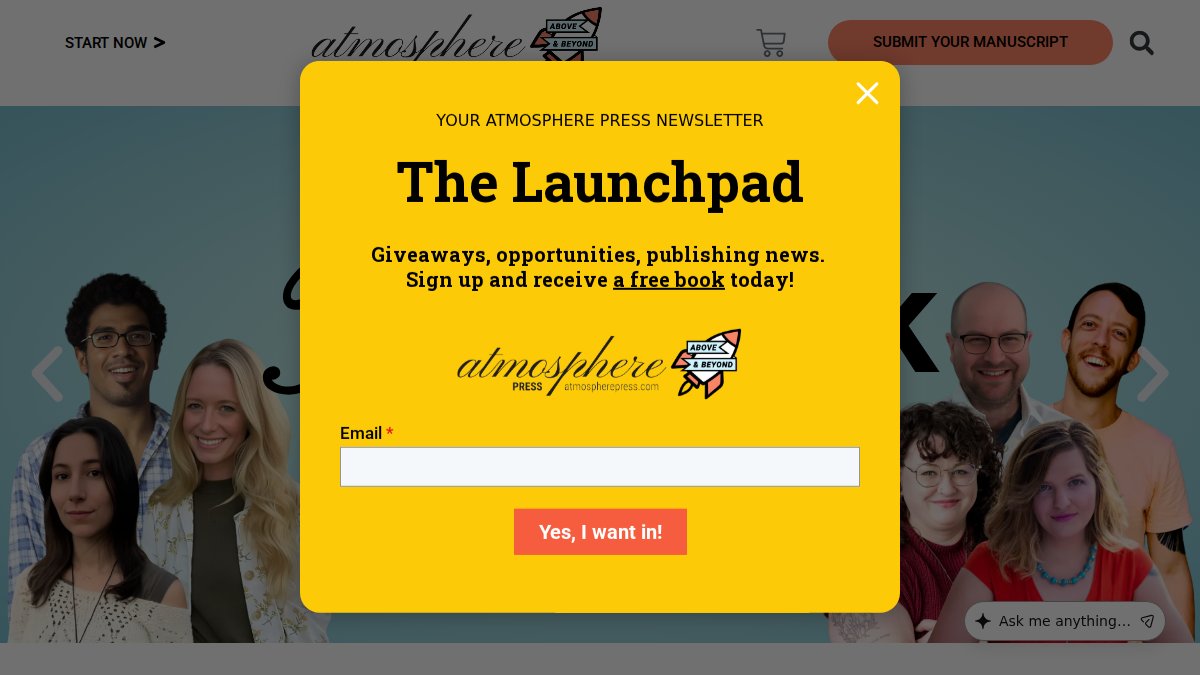
Atmosphere Press publishes selectively with transparent pricing. The Essential package starts at $7,200 (installment payments) and includes professional editing, custom design, and global distribution (atmospherepress.com). Authors retain full rights and receive 90% of net sales royalties, exceptionally high for hybrid publishing.
Best for: Authors prioritizing author rights, transparent contracts, and community support.
Pros:
- Transparent, published pricing with no hidden fees
- Author-friendly contracts with 90% royalty splits
- Full rights retention
- Community-focused ongoing support
Cons:
- Selective acceptance process
- Higher upfront investment ($7,200+)
5. Greenleaf Book Group: Thought Leadership Focus
Greenleaf specializes in business and thought leadership titles with strong relationships to bookstore chains and library distributors. Pricing typically ranges from $15,000-$25,000 for entry-level packages. They’re selective; your manuscript needs significant retail potential or an existing platform.
Best for: Business authors and executives using books to build authority and generate leads.
Pros:
- Strong distribution into physical bookstores
- Tailored marketing campaigns focused on results
- Dedicated account management
Cons:
- Expensive; entry-level packages start at $15,000+
- Selective acceptance
6. She Writes Press: Dedicated to Women Authors
She Writes Press exclusively publishes women authors with a single all-inclusive package priced at $12,000 (shewritespress.com). Services include professional editing, custom design, eBook conversion, warehousing, fulfillment, and distribution to 130+ retailers including Simon & Schuster’s trade distribution for bookstore placement.
Best for: Women authors seeking a dedicated publisher with quality production and author-friendly terms.
Pros:
- Specialized focus on women authors
- All-inclusive package removes confusion
- Simon & Schuster distribution for bookstore placement
- Includes warehousing and fulfillment
Cons:
- Single package price ($12,000) is inflexible
- Only for women authors
- Higher upfront investment
7. Manhattan Book Group: Guaranteed Bestseller Status
Manhattan Book Group guarantees Amazon bestseller status through aggressive marketing and advertising campaigns. Packages start around $10,000-$13,000 and include professional editing, custom design, formatting, and worldwide Ingram distribution. Authors retain all rights and receive 100% royalties after costs are recouped.
Click Here To Order Your Copy →
Best for: Authors prioritizing short-term visibility and bestseller status.
Pros:
- Guaranteed Amazon bestseller status
- Authors retain all rights
- 100% royalties after costs recouped
- Worldwide Ingram distribution
Cons:
- High upfront cost ($10,000-$13,000+)
- Bestseller status may not translate to sustainable sales
8. Phoenix Ghostwriting: Full-Service Writing and Publishing
Phoenix Ghostwriting offers end-to-end service: research, writing, editing, and publishing. A professional writer works with you to develop and write your book, then handles editing, formatting, design, and publishing across multiple formats. Services include strategic marketing plans and social media marketing. Pricing typically runs under $10,000.
Best for: Authors with ideas but no finished manuscript.
Pros:
- Complete “idea-to-bookshelf” pipeline
- Ghostwriting included
- Emphasis on author ownership and unlimited revisions
- Includes marketing and author website setup
Cons:
- Pricing not transparent; requires custom quote
- Less control over the writing process
9. Lulu: Budget-Friendly Print-on-Demand
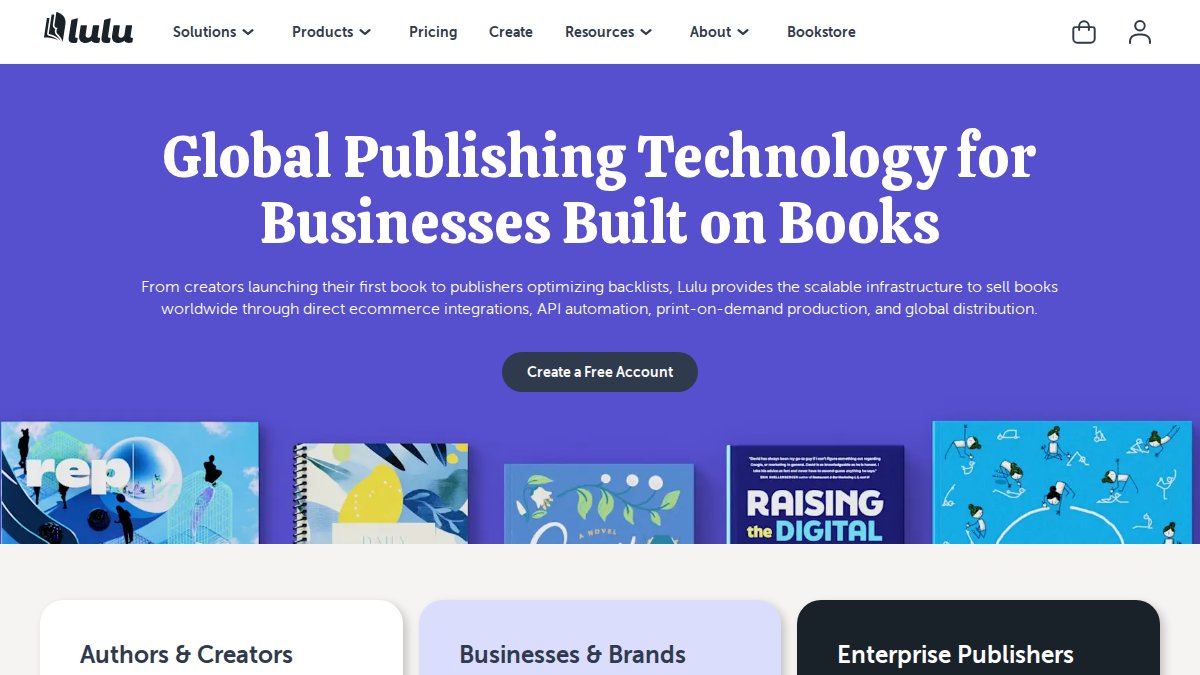
Lulu is a print-on-demand platform allowing authors to publish with minimal upfront cost. You upload your manuscript, choose your format, and Lulu prints and distributes as ordered. A 200-page paperback typically costs around $5.34 to print. You set retail price and keep the difference minus Lulu’s distribution fee.
Best for: Budget-conscious authors with finished manuscripts who’ve already invested in professional editing and design.
Pros:
- Minimal upfront cost; pay only for books printed
- High-quality print options and customization
- Wide distribution to major retailers
Cons:
- Significant royalty cuts through distribution fees
- No comprehensive editorial or marketing services
- You source editing, design, and marketing
Cost of Hybrid Publishing Services Explained
Hybrid publishing costs vary dramatically based on services needed and publisher choice. Most charge either upfront fees, a percentage of sales, or both. Upfront fees typically cover editing, design, formatting, and initial distribution setup.
Upfront fees range from $400 (basic print-on-demand) to $100,000+ (premium publishers with comprehensive marketing). Mid-range hybrid publishers typically charge $7,000-$25,000 for all-inclusive packages.
Royalty splits vary significantly. Self-publishing platforms like Lulu take substantial cuts through distribution fees. Selective publishers like Atmosphere Press offer 90% royalties. Traditional publishers offer 10-15% for print, 25% for eBooks, but cover all costs upfront.
When evaluating cost, ask: What’s included? What costs extra? What percentage of sales do you keep? How long does the publisher maintain distribution? Can you get rights back if unsatisfied?
Hybrid Publishing Contract Red Flags to Watch
A contract defines the real relationship between author and publisher. Watch for vague language around rights. Contracts should clearly state which rights you retain and which the publisher owns. Be wary of “all rights” or “exclusive rights” without specific limitations.
Pricing transparency is critical. Contracts should itemize every service and its cost. Royalty splits that seem unfair warrant questioning. If a publisher takes 50%+ of sales revenue while charging upfront fees, they’re double-dipping.
Reversion clauses determine when rights return to you if the book goes out of print. Good contracts specify that if sales fall below a threshold, rights revert to you after notice.
Watch for non-compete clauses restricting your ability to publish similar books independently. Contract length matters, prefer 3-5 year terms with renewal options over 10+ year commitments.
Finally, be cautious of guaranteed outcomes. If a contract promises bestseller status, specific sales numbers, or media placements, get those promises in writing with financial penalties if unmet.
How to Evaluate and Select the Right Publisher
Choosing the right hybrid publisher requires evaluating multiple factors beyond price. Start by clarifying your goals: profit, platform building, or personal fulfillment?

Create a comparison framework listing services you actually need: editing, design, formatting, distribution, marketing. Research the publisher’s track record. How many books have they published? What’s their distribution reach? Can you find author reviews or testimonials?
Get transparent pricing. Request detailed quotes itemizing every service and cost. Be wary of publishers that won’t disclose pricing upfront. Review the contract carefully and have a lawyer review it if possible. Pay special attention to rights, royalty splits, reversion clauses, and term length.
Ask about distribution channels. Can the publisher get your book into physical bookstores, or is it primarily online? Evaluate marketing support and talk to the publisher directly about their process and typical author outcomes. Trust your instincts, a good publisher wants partnership, not a transaction.
Choosing a hybrid publishing alternative comes down to matching your needs, budget, and goals with a publisher aligned with your vision. Whether exploring options for a business book, thought leadership platform, or personal project, the publishers outlined here represent the range available. Evaluate them carefully, ask hard questions about contracts and costs, and choose the partner that will help you bring your book to market professionally and profitably.
| Publisher | Starting Price | Best For | Distribution Model | Royalty Structure |
|---|---|---|---|---|
| BookBaby | $399 | Straightforward, transparent process | Global (40+ retailers) | Per-book revenue after fees |
| AuthorHouse | $1,499 | Tiered services with marketing | Major retailers | Tiered by package |
| Forefront Books | Custom quote | Premium with Simon & Schuster access | Bookstore placement | Custom arrangement |
| Atmosphere Press | $7,200 | Author-friendly contracts | Global distribution | 90% net royalties |
| Greenleaf Book Group | $15,000-$25,000+ | Thought leadership and business books | Physical bookstore placement | Custom arrangement |
| She Writes Press | $12,000 | Women authors | Simon & Schuster trade distribution | All-inclusive package |
| Manhattan Book Group | $10,000-$13,000 | Bestseller status focus | Ingram distribution | 100% after costs recouped |
| Phoenix Ghostwriting | Under $10,000 | Full-service writing and publishing | Multiple formats | Project-based |
| Lulu | $5-$15 per book | Budget-conscious authors | Amazon, Barnes & Noble | Per-book printing cost model |
Frequently Asked Questions
What is the reputation of Amplify Publishing Group?
Amplify Publishing Group operates as a hybrid publisher offering editorial services, book design, and distribution support. Like many hybrid publishers, its reputation varies based on individual author experiences. Authors should research independent reviews, verify contract terms, and confirm that the publisher retains your intellectual property rights. Check whether they offer transparent pricing and what royalty rates they provide after costs are recouped.
What are the key differences between hybrid publishing and vanity publishing?
Hybrid publishing provides professional editorial services, design, distribution, and marketing support while authors retain creative control and intellectual property. Vanity presses primarily focus on printing without editorial standards or meaningful distribution. Legitimate hybrid publishers vet manuscripts, offer professional editing, secure ISBN registration, and distribute through major retail channels. Vanity presses often charge high upfront fees with minimal distribution beyond print-on-demand platforms.
How does the cost of hybrid publishing services compare to traditional publishing?
Traditional publishers absorb all costs and pay authors advances plus royalties, but offer limited creative control. Hybrid publishing requires author investment ranging from $5,000 to $100,000+ depending on services selected, but authors retain more rights and higher royalty percentages. Self-publishing costs less upfront but requires authors to hire freelance editors, designers, and marketers separately. The total cost of hybrid publishing services depends on package tier, editing depth, design complexity, and marketing scope.
What should authors look for in a hybrid publishing contract?
Review these critical contract elements: author retains intellectual property rights, royalty rates (aim for 50%+ of net sales), transparent cost breakdowns with no hidden fees, clear reversion clauses if the book goes out of print, rights to your manuscript after the contract ends, and defined marketing commitments. Avoid contracts requiring exclusive rights, indefinite terms, or vague cost structures. Ensure the publisher specifies what services are included and what costs are additional. Have an attorney review before signing.
Are there reputable alternatives to Amplify Publishing Group for non-fiction authors?
Yes. BookBaby offers affordable all-in-one packages starting at $399. Atmosphere Press provides transparent pricing with 90% royalty splits. Greenleaf Book Group specializes in business and thought leadership with strong bookstore distribution. Forefront Books offers Simon & Schuster distribution. She Writes Press focuses on women authors with high-end design. Manhattan Book Group guarantees bestseller status and media placement. Each serves different author needs, budgets, and goals. Compare their services, royalty rates, and distribution reach before deciding.
This article was written using GrandRanker