
How to Choose the Best Gold Coins for Retirement
Quick Summary
The best gold coins for retirement savings are widely recognized sovereign bullion coins, such as the American Gold Eagle, Canadian Gold Maple Leaf, and South African Krugerrand. Choose based on your budget, storage plans, and resale expectations, and confirm IRA eligibility with a custodian before buying.
- Compare the premium over spot price, since it varies by coin, quantity, and dealer.
- Widely known coins often carry higher premiums but can be easier to resell later.
- Confirm each coin’s retirement account eligibility with your custodian in writing before purchasing.
- Factor in the spread, storage, insurance, and custodian fees alongside the purchase price.
- Buy from established dealers with a published buyback policy and keep purchase records.
Table of Contents
- Why Investors Consider Gold Coins for Retirement
- The Best Gold Coin to Buy for Investment: Side-by-Side Comparison
- American Gold Eagle vs. Gold Buffalo: Which Fits Your Plan
- Gold IRA Eligible Coins: Which Qualify for Retirement Accounts
- Gold Content, Premiums and the True Cost of Ownership
- Gold Coins vs. Gold ETFs: Choosing Physical Ownership or Paper Exposure
- Matching Your Gold Allocation to Your Retirement Timeline and Next Steps
- Frequently Asked Questions
How to Choose the Best Gold Coins for Retirement
Last Updated: November 5, 2026
Why Investors Consider Gold Coins for Retirement
Choosing the best gold coins for retirement savings starts with understanding what physical gold does inside a long-term portfolio. This guide looks at how gold has behaved as a store of value, and why many retirement savers keep a small allocation in it. Gold is a precious metal that has been used as money and a store of wealth for thousands of years.
Many investors hold gold as a hedge against inflation and currency swings. Its price does not depend on a single company or government, which is one reason it appears in so many retirement discussions. Gold also tends to move differently from stocks and bonds, though it can be volatile over short periods.
Physical coins give owners something paper assets do not: direct possession. You can hold them, store them, and sell them to a dealer without relying on a brokerage. That tangibility is the main reason people choose coins over electronic exposure.
The Best Gold Coin to Buy for Investment: Side-by-Side Comparison
The best gold coin to buy for investment depends on your budget, your storage plans, and how easily you want to resell. Our article on gold coins vs gold bars explains how the two formats compare before you commit to a specific coin. Most buyers look at four factors: gold content, premium over spot price, recognition, and liquidity. Each factor pulls in a slightly different direction, so it helps to compare them side by side.
| Coin | Gold Content | Typical Pricing Factor | Best For |
|---|---|---|---|
| American Gold Eagle | 1 oz (varies by size) | Premium over spot, quantity-based | Widely recognized U.S. holding |
| Canadian Gold Maple Leaf | 1 oz (varies by size) | Premium over spot, quantity-based | Recognized sovereign bullion |
| South African Krugerrand | 1 oz (varies by size) | Often lower premium | Buyers focused on lower cost |
| Pre-1933 Gold Coins | Varies by coin | Collector and numismatic factors | Collectors and diversified holders |
Pricing depends on quantity, dealer, and market conditions at the time of purchase. Check current prices with a dealer before you buy rather than relying on figures from an article.
American Gold Eagle Features and Suitability
The American Gold Eagle is a U.S. bullion coin that many investors consider. Buyers can verify its specifications against the United States Mint’s published information.
A common mistake is buying a coin only for its lower price per ounce without considering resale. Widely known coins often carry a higher premium but can be easier to sell later.
Canadian Gold Maple Leaf and Other Sovereign Options
The Canadian Gold Maple Leaf is another sovereign bullion coin. Other sovereign options include the Austrian Gold Philharmonic and the South African Krugerrand.
When comparing sovereign coins, look at the total price rather than the headline figure alone.
American Gold Eagle vs. Gold Buffalo: Which Fits Your Plan
Many buyers narrow their choices to the American Gold Eagle and the American Gold Buffalo. Both are U.S. Mint products, but they differ in design, purity, and cost structure.
The right pick between coins depends on your plan, budget and resale expectations.
Gold IRA Eligible Coins: Which Qualify for Retirement Accounts
Not every gold coin can be held inside a retirement account, and the rules are narrower than most buyers expect. Eligibility for a self-directed precious metals IRA is governed by IRS rules and their fineness requirements, so check the current requirements with a qualified professional before purchasing.
Coin eligibility varies, and collectible or numismatic pieces may be treated differently from bullion, so confirm each coin’s status with your custodian.
Eligibility is only part of the process. Precious metals held in a retirement account generally must be managed through a custodian and stored in an approved depository. Ask your custodian to explain the fees involved, which are separate from the coin premium.
Click Here To Order Your Copy →
Before funding an account, ask the custodian to confirm in writing that the specific coin, year, and mint product you intend to buy is on its approved list.
Watch out: tax treatment of precious metals IRAs is specific and can change. Verify current rules with a qualified tax professional or the custodian before committing funds, and do not rely on a dealer’s summary. Our article on Gold IRA vs. physical gold investment explains how these accounts differ from holding coins directly.
Gold Content, Premiums and the True Cost of Ownership
The purchase price of a gold coin is only the first line on the cost sheet, and the gap between the cheapest and most expensive way to own an ounce of gold is wider than most buyers realize. A useful way to compare coins is to separate four costs: the premium over spot at purchase, the bid-ask spread at sale, ongoing storage and insurance, and any account or custodian fees if the metal sits inside a retirement account.
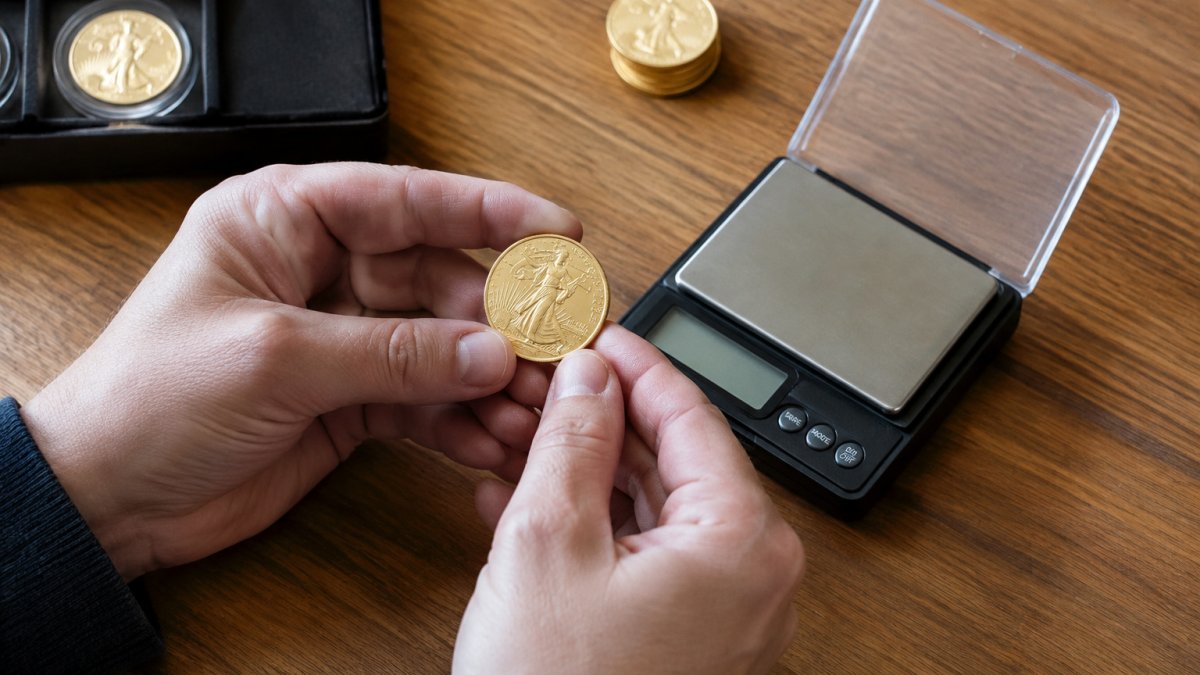
Start with the premium. Dealers quote coin prices as spot plus a percentage, and that percentage varies by product, quantity, and market conditions. Check current prices with a dealer, or with My Gold Book’s website for a current quote, rather than relying on figures from an article.
Then look at the spread. When you sell, a dealer buys back below spot, and the difference between the buy and sell price is the spread. Compare buy and sell prices across sources before deciding which coin to purchase.
Ongoing costs are easy to overlook. Directly held coins require secure storage and may warrant insurance, and retirement-account custodians and depositories generally charge fees regardless of gold’s price. Our guide to storing physical gold at home vs in a vault explains which option fits your holdings. Ask for the full fee schedule before opening an account.
A practical way to compare is to estimate total cost as a percentage of the metal’s value. Add the purchase premium, assume a realistic resale spread, and add annual storage and fees multiplied by your expected holding period. Consider running the same calculation for other options, such as gold ETFs or physical bars, which carry different fee and premium structures.
Watch out: buying from an unverified seller can expose you to counterfeit coins, and a too-good-to-be-true premium is a warning sign. Buy from established dealers with a published buyback policy, verify weight and dimensions against the mint’s specifications, and keep purchase records and assay certificates for future resale.
Gold Coins vs. Gold ETFs: Choosing Physical Ownership or Paper Exposure
Gold ETFs offer exposure to gold prices without holding metal, and they can be traded like stocks. Physical coins require storage but give you direct ownership. The right choice depends on whether you value possession or convenience.
Coins may suit investors who want tangible assets, while ETFs may suit investors who want easily traded exposure within a brokerage account. Many retirement savers use a mix, though each approach comes with different risks and costs.
Matching Your Gold Allocation to Your Retirement Timeline and Next Steps
How much gold belongs in your retirement plan depends on your timeline, risk tolerance, and existing savings. Investors further from retirement may be able to tolerate more price volatility, while those nearing retirement often prefer smaller, more stable allocations. Many planners suggest keeping gold as a modest part of a diversified portfolio rather than the core.
Start by defining your goal, setting a budget, and choosing one or two coins that match it. Verify eligibility if you plan to use a retirement account, and compare premiums from several dealers. Our guide to the best ways to invest in gold for retirement covers broader strategies, and our six steps to start a precious metals IRA walks through the account setup process.
Frequently Asked Questions
Is it worth buying gold for retirement?
Gold can serve as a diversifier in a retirement portfolio, but it produces no income such as dividends or interest, and its price can swing sharply over years. Many planners treat it as a small allocation rather than a core holding. Whether it fits depends on your timeline, risk tolerance and existing savings. Compare total costs, including dealer premiums and storage, before deciding how much to allocate.
Can gold coins be held in a retirement account?
Some gold coins can be held in a self-directed IRA, but eligibility is limited by IRS rules on metal purity and approved coin types. Retirement accounts must also use an approved custodian and depository for storage. Confirm eligibility with your custodian before purchasing.
What should I compare when choosing gold coins for retirement savings?
Compare gold content and fineness, the premium over spot price that you pay and recover on resale, liquidity and how widely the coin is recognized by dealers. Also check whether the coin is IRA-eligible and what storage and insurance will cost each year.
This article is for general information only and is not investment, tax, or legal advice. Consult a qualified financial professional before making retirement decisions.
