
Physical Gold Storage for Beginners: A Complete Guide
Table of Contents
- Why Physical Gold Storage Matters
- Home Safe Requirements for Gold
- Storing Gold at Home vs. Professional Vaults
- Professional Bullion Vaulting Services
- Insuring Physical Gold Assets
- Tax Implications by Storage Location
- Setting Up Your Gold Storage Plan
- Common Storage Mistakes to Avoid
Last Updated: August 17, 2026
Why Physical Gold Storage Matters
Gold remains a hedge against inflation and economic uncertainty, but owning physical gold introduces a critical challenge: secure storage. Physical gold storage isn’t just about hiding bullion in a closet, it’s a strategic decision affecting your asset’s security, accessibility, tax treatment, and long-term wealth preservation. The difference between storing gold at home versus in a professional vault can mean the difference between peace of mind and constant worry, while also affecting insurance costs, tax liability, and emergency access. This guide from My Gold Book breaks down everything you need to know to make an informed storage decision.
Home Safe Requirements for Gold
If you’re considering keeping gold at home, understanding safe specifications is critical. Not all safes are created equal, and choosing the wrong one can leave your precious metals vulnerable to theft or loss.
UL Ratings and Fire Ratings Explained
A UL rating (Underwriters Laboratories certification) measures a safe’s ability to protect contents during a fire. A UL 350 rating means the safe kept its contents below 350°F during testing. For physical gold storage, UL fire ratings matter less than burglary ratings. A TL-15 or TL-30 rating (Time Lock) indicates the safe can resist tools and torches for 15 or 30 minutes respectively, these specifications actually protect against theft. Look for safes with both a high burglary rating and adequate fire protection if you store documents alongside your gold.
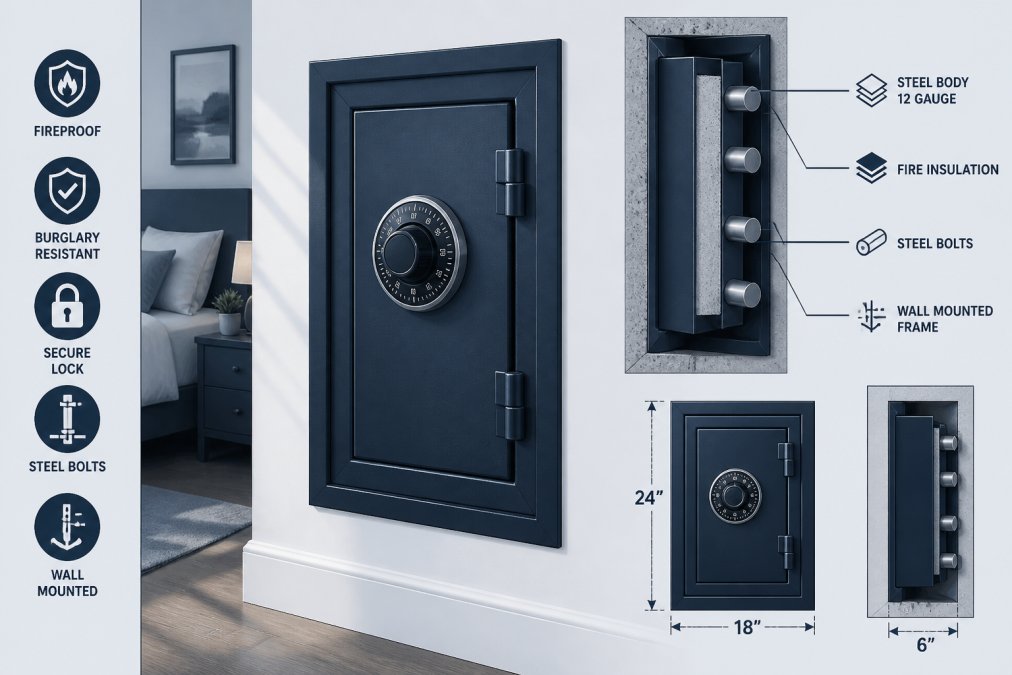
Placement and Home Security Systems
Where you place your safe matters as much as what safe you choose. Bolting your safe to the floor or wall studs makes it difficult to remove quickly, far more effective than hiding it in drywall. Consider your home security system as part of your storage strategy. Motion sensors, door alarms, and security cameras create layers of deterrence, and many insurance companies offer discounts for monitored systems. A safe without a security system is essentially a locked box that determined thieves can work around given enough time.
The location of your safe should balance accessibility with security. Some collectors use decoy safes to confuse potential thieves, placing less valuable items in an obvious location while keeping the bulk of their gold elsewhere.
Storing Gold at Home vs. Professional Vaults
The decision between home storage and professional vaults hinges on your quantity of gold, risk tolerance, and need for accessibility.
Pros and Cons of Home Storage
Home storage offers immediate access to your gold without fees or third-party involvement. You maintain complete control and privacy. For small quantities (under 10 ounces), home storage in a quality safe is practical and cost-effective.
The drawbacks are substantial. Home safes can be stolen entirely if not properly secured. Insurance coverage for home-stored precious metals is expensive and often limited. You’re also responsible for security maintenance, inventory management, and emergency access if something happens to you. Home storage also creates tax complications, as the IRS requires documentation of precious metals held at home.
Bank Safe-Deposit Boxes and Private Vaults
Bank safe-deposit boxes offer moderate security at low cost. However, banks restrict access to business hours, may freeze your box during legal proceedings, and provide limited insurance protection.
Private vaults offer superior security compared to bank boxes. These facilities use advanced security protocols, 24/7 monitoring, and insurance coverage that exceeds bank offerings. The trade-off is higher cost and less convenient access.
| Storage Method | Security Level | Cost | Access | Insurance |
|---|---|---|---|---|
| Home Safe | Moderate | Low | Immediate | Limited, expensive |
| Bank Safe-Deposit Box | Moderate | Low | Business hours | Limited |
| Private Vault | High | Moderate to High | Scheduled | Comprehensive |
| Allocated Professional Storage | Very High | Moderate | Documented | Full coverage |
Professional Bullion Vaulting Services
Professional vaulting services cater to serious collectors and investors who need industrial-grade security and comprehensive insurance. These facilities are designed specifically for precious metals storage, with security protocols that exceed bank standards.

Allocated vs. Unallocated Storage
Allocated storage means your specific gold bars or coins are segregated and identified as yours. You receive a detailed inventory list and can request delivery of your exact items. This eliminates counterparty risk, as the vault operator cannot loan out or use your gold.
Unallocated storage means your gold is pooled with other clients’ holdings. You own a quantity of gold, but not specific bars. Unallocated storage is cheaper but carries counterparty risk. For serious collectors, allocated storage is worth the premium cost.
Storage Fees and Vault Security Standards
Professional vaults typically charge annual fees based on the value or weight of stored gold. Security standards include reinforced concrete vaults, armed guards, surveillance systems, restricted access protocols, and regular third-party audits. Look for vaults that publish security certifications and maintain insurance coverage matching your holdings. Reputable vaults maintain relationships with major insurance carriers and submit to regular independent audits.
Insuring Physical Gold Assets
Insurance for physical gold storage varies dramatically depending on where you store it. Home-stored gold is typically covered under homeowners insurance up to $2,000-5,000 for precious metals. Anything beyond that requires a rider or separate policy.
Click Here To Order Your Copy →
Bank safe-deposit boxes offer minimal insurance protection. Most banks disclaim liability for contents, leaving you to prove your loss and negotiate with your homeowners insurer.
Professional vaults include insurance as part of their service. Full-value insurance is standard with reputable operators, meaning your gold is covered for its full market value. Document your gold inventory thoroughly by photographing each piece, recording serial numbers, and maintaining purchase receipts. This documentation is essential for insurance claims and tax purposes.
Tax Implications by Storage Location
The location where you store gold affects your tax obligations and reporting requirements. Gold stored at home is subject to capital gains tax when sold. If you sell gold for more than $600 in a single transaction, Form 8949 (Sales of Capital Assets) and Schedule D must be filed.
Gold stored in professional vaults may have different reporting requirements depending on the vault’s structure. Allocated storage typically requires more detailed reporting than unallocated storage. The tax basis of your gold determines your capital gains tax when you sell, so maintaining accurate purchase records is essential. If you inherit gold, you receive a stepped-up basis to the fair market value at the date of death, which can significantly reduce your heirs’ tax liability.
Consult a tax professional before establishing your storage arrangement, as the difference between allocated and unallocated storage can have meaningful tax consequences over time.
Setting Up Your Gold Storage Plan
Creating a storage plan requires several deliberate steps.
Step 1: Determine Your Gold Quantity and Type
Start by defining how much gold you plan to own and in what form. Are you collecting bullion coins, bars, or numismatic pieces? Calculate the physical space your gold will require. Ten ounces of gold bullion might fit in a small box; 100 ounces requires more substantial storage. This calculation helps you determine whether home storage is practical or if professional vaulting makes more sense.
Step 2: Choose Your Storage Method
Evaluate your options based on your quantity, accessibility needs, and risk tolerance. Small quantities (under 50 ounces) are practical for home storage in a quality safe. Larger quantities benefit from professional vaulting. If you choose home storage, invest in a safe with proper UL burglary ratings (TL-15 or higher) and bolt it securely. If you choose professional vaulting, research operators carefully, verify insurance coverage, audit history, and fee structures.
Step 3: Document Your Inventory
Maintain detailed records of every piece of gold you own, including type, weight and purity, serial number, purchase date and price, current location, and photographs. This documentation serves multiple purposes: insurance claims, tax reporting, estate planning, and inventory management.
Step 4: Arrange Insurance and Emergency Access
Work with your insurance agent to ensure your gold is properly covered. For home storage, obtain a rider to your homeowners policy or a separate precious metals policy. For professional storage, verify the vault’s insurance coverage matches your holdings. Establish an emergency access protocol by providing a trusted family member or executor with documentation of where your gold is stored and how to access it.
Common Storage Mistakes to Avoid
Collectors frequently make preventable errors that compromise their gold’s security or create unnecessary costs.
Storing gold without insurance is the most common mistake. A single theft or disaster can wipe out your investment. Choosing a safe based on fire rating alone leaves your gold vulnerable to theft, prioritize burglary ratings (TL-15, TL-30) over fire ratings. Failing to document inventory creates problems during insurance claims and tax reporting. Storing all gold in one location concentrates risk; consider splitting holdings between home storage and professional vaulting. Neglecting to plan for inheritance leaves your heirs without clear instructions. Overpaying for vault storage happens when collectors don’t shop around or understand fee structures.
Choosing the right storage method for your gold is one of the most important decisions you’ll make as a collector. The stakes are high, your decision affects security, insurance costs, tax liability, and accessibility. My Gold Book’s comprehensive guide "GOLD: The Most Precious of Metals" by Douglas Ginter provides deeper context on gold’s role in wealth preservation and helps you understand whether physical gold fits your broader investment strategy. Start with a clear inventory of your holdings, evaluate your security needs honestly, and select a storage method that matches your situation. Proper storage protects your asset and gives you the peace of mind that comes from knowing your gold is secure.
Frequently Asked Questions
What is the safest way to store physical gold?
The safest approach depends on your collection size and access needs. Home storage in a UL-rated fireproof safe offers immediate access but requires strong security measures. Professional bullion vaulting services provide maximum security with third-party audits, tamper-evident packaging, and insurance, though with higher fees and less frequent access. Bank safe-deposit boxes offer a middle ground but have limited access hours and may not provide adequate insurance coverage. Most collectors combine methods: keeping smaller quantities at home and larger bullion holdings in professional vaults.
Do I need insurance for my physical gold collection?
Yes, insurance is essential for physical gold assets. Home storage typically requires a rider on your homeowners or renters policy, which may have limits around $2,500 to $5,000 for precious metals without additional coverage. Bank safe-deposit boxes often lack insurance protection, making separate precious metals insurance necessary. Professional vaulting services usually include insurance in their fees, with allocated storage providing the strongest protection. Document your inventory with photographs and serial numbers to support any claim, and review your policy annually to ensure coverage keeps pace with your collection's value.
Is it illegal to store gold at home?
No, it is legal to store gold at home in the United States. You have the right to own and store bullion coins, bars, and ingots on your property. However, you must report the value on your homeowners insurance and declare it for tax purposes if required. Some homeowners association rules may restrict safe placement, and local zoning laws rarely apply to personal storage. The key is ensuring proper documentation, insurance coverage, and security measures to protect your asset and comply with tax reporting requirements for capital gains.
What should I do if I need emergency access to my stored gold?
Plan for emergency access before you need it. If storing at home, keep your safe location and combination known only to trusted family members or in a secure document. For bank safe-deposit boxes, ensure your beneficiaries know the location and have legal access rights. With professional vaulting services, confirm their emergency access protocols, most offer expedited withdrawal within 24-48 hours. Document your storage location, access instructions, and contact information in your will or with a trusted advisor so your estate can retrieve your gold if needed.
This article was written using GrandRanker