
Gold Investment Tax: A Complete 2026 Guide
Table of Contents
- How Gold Investment Sales Are Taxed
- Understanding the 28% Collectibles Tax Rate on Gold
- Short-Term vs. Long-Term Capital Gains on Gold
- Calculating Cost Basis for Gold Bullion Sales
- Reporting Gold Sales to the IRS
- Tax Treatment of Gold ETFs and Mining Stocks
- State Income Tax and Sales Tax Considerations
- Tax-Loss Harvesting and Gold in Retirement Accounts
- Frequently Asked Questions
Last Updated: September 17, 2026
How Gold Investment Sales Are Taxed
When you sell gold investments, the IRS treats the transaction as a capital gain or loss. The amount you owe in taxes depends on how long you held the gold before selling it, the price you paid for it, and your overall income for the year.
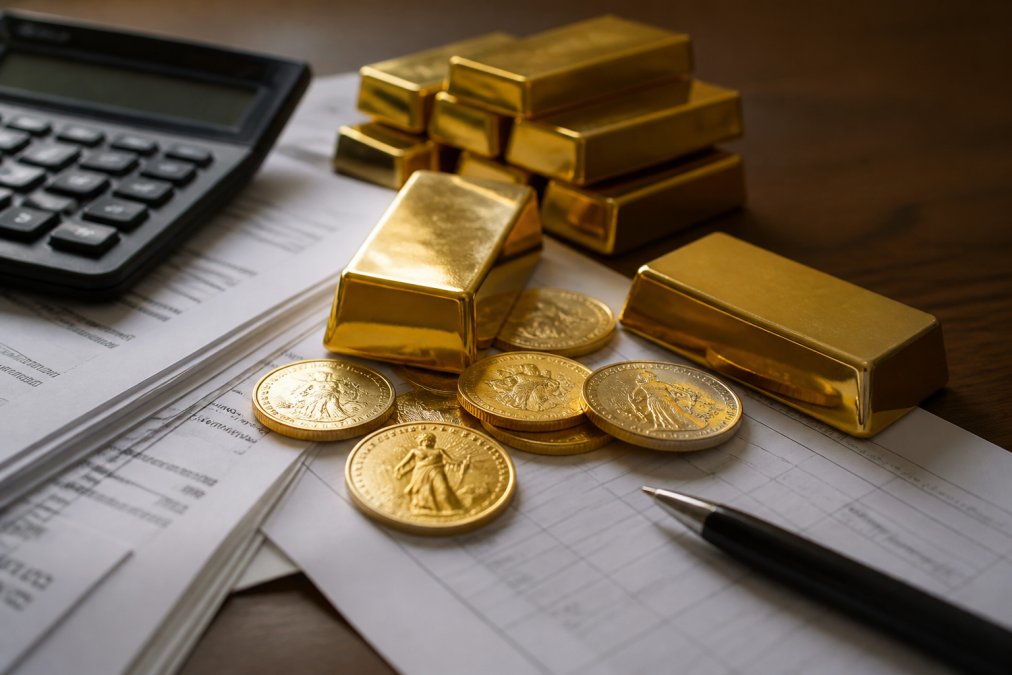
Gold investment tax applies to physical bullion, bars, and coins, as well as gold ETFs and mining stocks. The IRS classifies gold as a “collectible” under Section 408(m) of the Internal Revenue Code, which means it receives special tax treatment compared to stocks or bonds. Understanding how gold investment tax works is essential before you liquidate any position.
The tax you owe is calculated based on your adjusted basis (what you paid for the gold plus any fees) and the sale price. If you sell for more than you paid, you have a taxable gain. If you sell for less, you can claim a capital loss to offset other income. The holding period determines whether you pay short-term or long-term rates.
Track your cost basis meticulously from the moment you purchase. Include the purchase price, dealer fees, shipping, and insurance. The IRS requires precise documentation when you file, and gaps in your records can trigger an audit.
Understanding the 28% Collectibles Tax Rate on Gold
The collectibles tax rate of 28% applies to long-term capital gains on gold and other precious metals (Topic no. 409, Capital gains and losses). This is higher than the long-term capital gains rates for stocks and bonds, which cap out at 20% for high earners. For many investors, this 28% rate is the deciding factor in whether to hold gold long-term or use it as a short-term trading vehicle.
The 28% rate kicks in only if you’ve held the gold for more than one year. It applies to your net long-term gains from all collectibles combined, not just gold. If you sell multiple precious metals in the same year, the gains aggregate for tax purposes.
This higher rate exists because the IRS views collectibles differently from investment securities. Gold doesn’t generate income like dividend-paying stocks or interest-bearing bonds. Instead, it appreciates (or depreciates) based on market sentiment and supply-demand dynamics. The 28% rate is the IRS’s way of capturing more tax revenue from appreciation that isn’t tied to productive economic activity.
Your tax bracket still matters. If you’re in the 22% bracket, the 28% collectibles rate applies to your gold gains. If you’re in the 37% bracket, the 28% rate is actually a tax benefit because it caps your rate lower than your ordinary income rate. High earners benefit significantly from holding gold long-term for this reason.
Many investors miss this: the 28% collectibles rate applies to long-term gains only. Short-term gains are taxed as ordinary income, which could be 37% for high earners. Holding gold for just under one year to avoid long-term status can be extremely costly.
Short-Term vs. Long-Term Capital Gains on Gold
Short-term capital gains occur when you sell gold you’ve held for one year or less (Topic no. 409, Capital gains and losses). These gains are taxed as ordinary income at your marginal tax rate, which ranges from 10% to 37% depending on your income level. For most investors, short-term gains result in a higher tax bill than long-term gains.
Long-term capital gains apply when you’ve held gold for more than one year. These gains receive preferential tax treatment. For gold specifically, the long-term rate is 28% (the collectibles rate). For comparison, stocks and bonds held long-term are taxed at 0%, 15%, or 20% depending on income.
The holding period clock starts the day after you purchase. If you buy gold on January 15, 2026, your one-year mark is January 16, 2027. Selling on January 16 qualifies for long-term rates. Selling on January 15 triggers short-term rates.
This distinction makes timing crucial for gold investment tax planning. An investor in the 35% bracket holding gold for 11 months faces a 35% tax on gains. Waiting one more month drops the rate to 28%. That’s a 7-percentage-point difference, which can mean thousands of dollars on a large position.
Many traders intentionally hold gold positions just over one year to capture the long-term rate, even if the market suggests selling earlier. The tax savings often outweigh the opportunity cost of holding longer.
Calculating Cost Basis for Gold Bullion Sales
Cost basis is the original price you paid for gold plus any fees and expenses directly related to the purchase. For a single gold bar or coin, this is straightforward: purchase price plus dealer markup, shipping, and insurance.
When you sell, subtract your cost basis from the sale price. The difference is your capital gain or loss. If you paid $1,800 per ounce in fees and shipping, and you sell at $2,000 per ounce, your gain per ounce is $200.
Click Here To Order Your Copy →
Tracking cost basis becomes complex if you’ve made multiple purchases over time. The IRS allows several methods to determine which gold you’re selling:
- Specific identification: You specify exactly which bars or coins you’re selling. This requires detailed records and a written statement to your broker at the time of sale.
- First-in, first-out (FIFO): You’re assumed to sell the oldest gold first. This method is automatic if you don’t specify otherwise.
- Average cost: You calculate the average price of all your gold holdings and use that for each sale. This requires IRS permission and consistent application.
Specific identification gives you the most control over your tax outcome. If you have gold purchased at different prices, you can choose to sell the highest-cost basis gold first, minimizing your gain. This strategy works well if you’re rebalancing a portfolio.
Average cost is simpler for large holdings but may not optimize your tax position. FIFO is the default and works against you in a rising gold price environment because you’re selling older, cheaper gold first.
Specific identification is worth the administrative effort if you have substantial gold holdings. The tax savings from choosing which gold to sell can exceed the cost of maintaining detailed records.
Reporting Gold Sales to the IRS
When you sell gold through a dealer, the dealer files Form 1099-B with the IRS if the sale meets certain thresholds. Form 1099-B reports the proceeds from the sale but typically does not include your cost basis. You must provide that information yourself on Schedule D.
Schedule D is where you report capital gains and losses. You’ll list each gold sale separately, including the date acquired, date sold, proceeds, cost basis, and gain or loss. If you have many transactions, you can attach a separate statement and summarize on Schedule D.
The IRS matches the proceeds reported on Form 1099-B against your Schedule D filing.
- Dealer invoices showing purchase price and date
- Shipping and insurance receipts
- Sales confirmations showing proceeds and date
- Any correspondence with the dealer about cost basis
Tax Treatment of Gold ETFs and Mining Stocks
Gold ETFs are investment funds that hold physical gold or track gold prices. The IRS treats gold ETFs as collectibles, so they’re subject to the 28% long-term capital gains rate. This is identical to the tax treatment of physical gold bullion.
Investors in high tax brackets seeking gold exposure with lower tax rates should consider mining stocks over physical gold or gold ETFs. The 28% collectibles rate becomes a significant disadvantage for high earners.
State Income Tax and Sales Tax Considerations
State income tax applies to gold investment gains in all states except those with no income tax. If you live in California, you pay state income tax on your gold gains in addition to federal tax. The state rate compounds the federal burden.
Tax-Loss Harvesting and Gold in Retirement Accounts
Tax-loss harvesting is the practice of selling an investment at a loss to offset gains elsewhere in your portfolio. If you have a gold position that’s underwater, you can sell it to realize a loss and use that loss to offset gains from other investments or up to $3,000 of ordinary income in a single year.
Frequently Asked Questions
Is gold taxed as a capital gain or ordinary income?
Gold is taxed as a capital gain when you sell it for a profit. The rate depends on your holding period: short-term capital gains (held less than one year) are taxed at your ordinary income tax rate, while long-term capital gains (held over one year) benefit from preferential rates. However, physical gold bullion and collectible coins face a special 28% long-term capital gains rate, which is higher than the standard 15% or 20% rates for other investments. The actual tax liability depends on your total income and filing status.
What is the 28% collectibles tax rate on gold?
The collectibles tax rate of 28% applies to long-term capital gains from precious metals like gold bullion, coins, and bars. This rate is set by the IRS under Section 1(h) of the Internal Revenue Code and is higher than standard long-term capital gains rates (15% or 20%). It applies even if your regular long-term capital gains rate would be lower. This rate does not apply to gold ETFs or mining stocks, which use standard capital gains rates. Understanding this distinction is crucial for tax planning when you sell physical gold.
Do I have to report selling gold to the IRS?
Yes, you must report gold sales to the IRS on Form 1040 Schedule D. If your dealer sells more than $20,000 worth of bullion in a single transaction, they are required to file Form 1099-B with the IRS, which reports the sale proceeds. You must calculate your taxable gain by subtracting your cost basis from the sale price and report this on Schedule D. Failure to report gold sales can result in penalties and interest charges. Keep detailed records of purchase dates, prices, and quantities to support your cost basis calculations.
How do I calculate cost basis for gold bullion?
Cost basis includes the purchase price plus any acquisition costs like dealer fees, shipping, and insurance. For example, if you buy one ounce of gold for $2,000 and pay $50 in dealer fees, your cost basis is $2,050. When you sell, subtract this cost basis from the sale proceeds to determine your taxable gain. If you purchased gold at different times and prices, use the specific identification method to match which specific gold you sold, or use the first-in, first-out (FIFO) method if you don’t specify. Accurate cost basis tracking is essential for correct IRS reporting and minimizing overpayment of taxes.