
Gold vs. Silver Investments: A 2026 Comparison
Table of Contents
- Gold vs. Silver: Key Differences
- Understanding the Gold-to-Silver Ratio Explained
- Volatility and Risk Profiles
- Is Gold a Good Inflation Hedge
- Physical Bullion vs. Gold ETFs
- Industrial Demand vs. Store of Value
- Tax Implications and Storage Logistics
- Which Metal Should You Choose
Last Updated: August 29, 2026
Gold vs. Silver: Key Differences
Gold and silver differ fundamentally in their supply dynamics, industrial applications, and price behavior. Gold serves primarily as a store of value and wealth preservation, while silver functions as both a precious metal and an essential industrial commodity. This dual nature creates a markedly different investment profile.
Gold has maintained its status as the ultimate safe haven asset for millennia, prized across cultures for its scarcity and immutability. Silver, by contrast, faces constant industrial demand from electronics manufacturers, solar panel producers, and medical device makers. Gold typically trades at a significant premium per troy ounce, reflecting concentrated investor and central bank demand. Silver’s lower absolute price makes it more accessible to retail investors, though with higher volatility.
Storage differs materially between the two. Gold’s density means significant investment value occupies minimal space. Silver requires substantially more storage volume for equivalent dollar amounts, making it less practical for large positions without dedicated vault space. The numismatic dimension, collector’s value beyond metal content, applies more heavily to gold, with rare coins commanding premiums far exceeding their bullion weight.
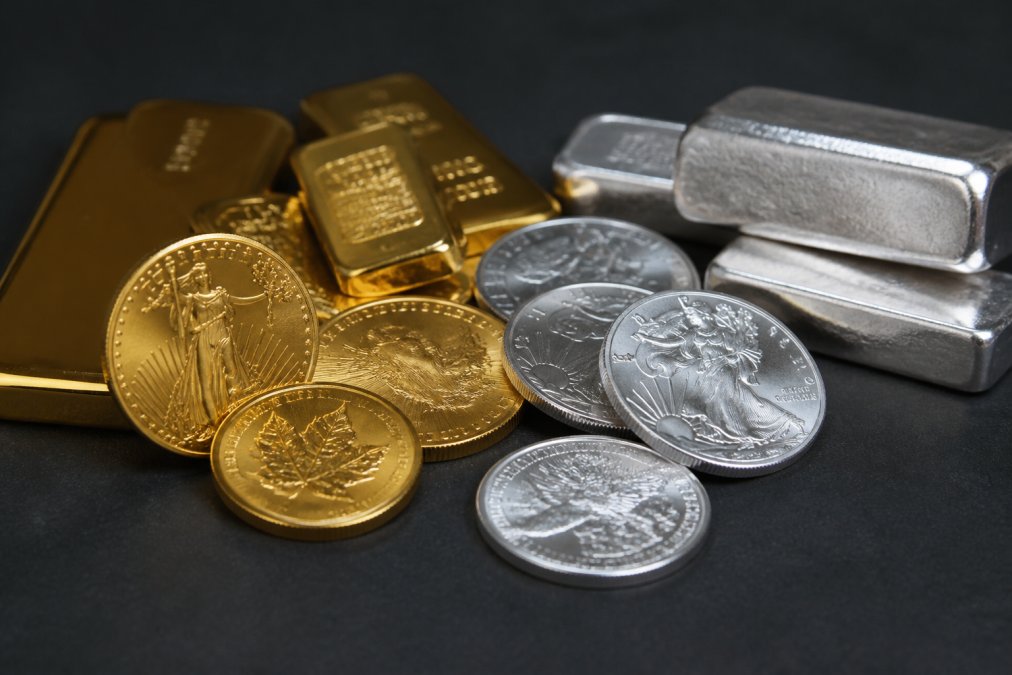
Understanding the Gold-to-Silver Ratio Explained
The gold-silver ratio represents the number of troy ounces of silver required to purchase one troy ounce of gold at current spot prices. This metric helps investors assess relative value between the two metals at any given moment.
Historically, the ratio has fluctuated between roughly 40:1 and 100:1, with a long-term average around 60:1 to 70:1 (usgs.gov). A rising ratio indicates gold strengthening relative to silver, typically occurring during recessions as investors flee to safety. A falling ratio signals silver gaining ground, often during economic expansion when industrial demand accelerates.
When the ratio reaches historically elevated levels, say 90:1 or higher, contrarian investors often interpret this as a signal that silver offers exceptional value relative to gold. Conversely, when the ratio compresses to 40:1 or below, gold appears relatively cheap. The ratio also reflects broader economic sentiment: in deflationary environments, gold dominates and the ratio widens; in inflationary environments with accelerating economic activity, silver’s industrial demand strengthens and the ratio narrows.
Volatility and Risk Profiles
Silver exhibits significantly higher price volatility than gold. Silver’s price can swing 5-10% in a single trading week, while gold typically moves 1-3% over comparable periods (peer-reviewed research). This volatility stems from silver’s dual nature as both investment asset and industrial commodity, when industrial demand weakens, silver’s price often falls sharply despite gold remaining stable.
Gold’s lower volatility reflects its singular focus on wealth preservation. Central banks hold gold as reserve assets, creating stable underlying demand. Institutional investors treat gold as a core portfolio holding, providing consistent demand across market cycles. During bear markets, gold typically declines 10-20% while silver often falls 30-50% (federalreserve.gov). The 2008 financial crisis exemplified this: gold declined roughly 5% while silver crashed 70%.

The correlation between gold and silver prices remains positive but imperfect. Both typically move in the same direction during major market dislocations, but silver often leads during recoveries. This imperfect correlation creates diversification benefits when holding both metals.
Is Gold a Good Inflation Hedge
Gold’s inflation-hedging properties depend on the type of inflation environment. During periods of rising prices driven by monetary expansion, gold typically performs well and maintains purchasing power. However, gold performs poorly during stagflation, the combination of rising inflation with stagnant economic growth. In the 1970s, despite soaring inflation, gold’s real returns turned negative during certain periods.
The distinction between nominal and real returns clarifies gold’s effectiveness. Gold’s nominal price may rise during inflation, but if inflation accelerates faster than gold’s price appreciation, gold’s real purchasing power actually declines. Over very long periods (decades), gold approximates a true inflation hedge, but exhibits considerable deviation over shorter horizons (years).
Silver’s inflation-hedging properties prove more complex due to industrial demand. During moderate inflation driven by economic growth, silver often outperforms gold as industrial production accelerates. During severe inflation or deflation, silver’s industrial demand collapses and it underperforms significantly.
When real interest rates (nominal rates minus inflation expectations) turn negative, gold becomes more attractive because holding cash generates negative returns after inflation adjustment. Rising real rates make gold less attractive as cash instruments begin offering positive real returns again.
Physical Bullion vs. Gold ETFs
The choice between physical bullion and gold exchange-traded funds represents a fundamental decision in accessing precious metals. Physical bullion provides direct ownership and eliminates counterparty risk. Gold ETFs offer convenience, liquidity, and tax efficiency that physical bullion cannot match. You purchase ETF shares through your brokerage account, gaining instant exposure to gold prices without managing storage logistics. ETFs track gold spot prices closely, with expense ratios typically ranging from 0.03% to 0.40% annually.
Tax treatment differs significantly. Physical gold and silver held for investment purposes receive unfavorable long-term capital gains treatment in certain circumstances, potentially taxed as collectibles at higher rates. Some gold ETFs structured as grantor trusts offer more favorable tax treatment, though this varies by specific fund and your individual tax situation.
Storage costs and insurance represent ongoing expenses for physical bullion that ETF investors avoid. A typical precious metals vault charges 0.5-1.0% annually of stored value, plus insurance premiums. Over decades, these costs compound significantly. An ETF investor pays only the fund’s expense ratio, typically far lower than physical storage costs.
Liquidity dynamics favor ETFs substantially. During market stress, physical bullion buyers become scarce and dealer premiums widen dramatically. ETF shares trade continuously with tight bid-ask spreads, ensuring you can exit positions at prices very close to the underlying gold value. This liquidity advantage proves crucial during market dislocations.
Industrial Demand vs. Store of Value
Silver’s industrial applications create a fundamental distinction from gold. Electronics manufacturers consume roughly half of annual silver production for circuit boards and contacts. Solar panel manufacturers use silver for electrical connections. Medical devices, water purification systems, and antimicrobial coatings drive additional demand. This industrial consumption means silver’s price responds to manufacturing cycles and economic activity in ways gold does not.
Click Here To Order Your Copy →
Gold’s industrial applications remain minimal, roughly 5-10% of annual demand derives from jewelry and industrial uses, with the remainder driven by investment demand and central bank accumulation. This concentration on investment demand makes gold’s price more purely a function of monetary policy and safe-haven flows.
During economic expansions, silver typically outperforms gold as rising industrial demand combines with investment demand. During recessions, silver underperforms as industrial demand collapses. Supply dynamics reflect these differences: silver supply comes from primary mining but also as a byproduct of copper, zinc, and lead mining. This byproduct silver means supply cannot easily contract when prices fall. Gold supply comes almost entirely from primary mining dedicated to gold extraction, allowing supply to contract when prices fall below production costs.
Tax Implications and Storage Logistics
Physical gold and silver held for investment purposes receive treatment as collectibles under federal tax law, subject to a maximum long-term capital gains rate of 28% rather than the standard 15% or 20% rates for most long-term capital gains.
Precious metal IRAs offer a tax-advantaged alternative. Self-directed IRAs allow you to hold physical gold and silver within the account structure, deferring taxation on gains until withdrawal. These accounts require using an IRS-approved custodian and storing metals in an approved depository.
State and local sales taxes apply to physical precious metals purchases in most jurisdictions, though some states exempt bullion. Numismatic coins often receive more favorable tax treatment than bullion in certain states.
Storage logistics present practical challenges. Home storage offers maximum control but introduces security risks and insurance complications. Professional vault storage through precious metals dealers offers security and insurance but introduces counterparty risk and ongoing costs. Segregated storage, where your specific metals are stored separately, costs more than allocated storage where metals are pooled.
Maintaining detailed records proves essential for tax reporting and estate planning purposes.
Which Metal Should You Choose
The choice between gold and silver depends on your specific investment objectives, risk tolerance, and time horizon. Gold serves investors prioritizing capital preservation and inflation protection. If you’re concerned about currency debasement or extended periods of negative real interest rates, gold’s role as the ultimate safe haven asset justifies a significant allocation.
Silver appeals to investors with higher risk tolerance seeking growth potential from economic expansion. If you believe manufacturing activity and industrial demand will accelerate, silver’s dual nature offers appreciation potential exceeding gold’s. Younger investors with decades until retirement can tolerate silver’s higher volatility.
Many sophisticated investors hold both metals in complementary roles. A typical allocation might weight gold at 60-70% of precious metals holdings with silver comprising 30-40%. This allocation provides gold’s stability while capturing silver’s upside potential during growth periods.
Your storage preferences and budget constraints should influence the allocation decision. If you’re uncomfortable with professional vault storage costs, gold’s higher value density makes it more practical for home storage. If you can afford professional storage, silver’s lower per-ounce cost makes larger physical positions more affordable. ETF investors avoid storage considerations entirely.
The optimal precious metals allocation depends on your complete financial picture. If your equity holdings already provide growth exposure, gold’s stability offers better diversification. If your portfolio leans heavily toward bonds and fixed income, silver’s growth potential complements your holdings more effectively.
| Factor | Gold | Silver | Advantage |
|---|---|---|---|
| Price Volatility | Low to Moderate | High | Gold |
| Industrial Demand | Minimal | Substantial | Silver (growth periods) |
| Inflation Hedge | Excellent | Good | Gold |
| Storage Efficiency | Excellent | Poor | Gold |
| Liquidity | High | High | Tie |
| Tax Treatment | Collectibles (28%) | Collectibles (28%) | Tie |
| Long-term Returns | Stable | Higher potential | Silver |
| Safe Haven Appeal | Maximum | Moderate | Gold |
Choosing between gold and silver requires balancing multiple competing objectives: capital preservation, growth potential, inflation protection, and practical storage considerations. Gold excels at wealth preservation and hedging against monetary disruption, while silver offers growth exposure tied to industrial demand and economic expansion. Most investors benefit from holding both metals in complementary proportions. My Gold Book’s comprehensive analysis of precious metals investing helps you navigate these decisions with confidence, providing the historical context and economic analysis needed to make informed choices about your precious metals allocation.
Frequently Asked Questions
Q: Is it better to invest in gold or silver right now?
A: The choice depends on your investment goals and risk tolerance. Gold typically offers stability and serves as a traditional safe haven asset during economic uncertainty, making it better for long-term wealth preservation. Silver carries higher volatility but offers greater upside potential and stronger industrial demand. Consider your portfolio diversification needs and time horizon. Many investors hold both precious metals to balance risk and opportunity.
Q: What is the gold-to-silver ratio and how do I use it?
A: The gold-to-silver ratio represents how many ounces of silver equal one ounce of gold in price. Historically, this ratio averages around 60:1 to 70:1, though it fluctuates based on market conditions. When the ratio is high, silver may be relatively undervalued; when it's low, gold may offer better value. Investors use this ratio to identify buying opportunities and rebalance their precious metals allocation based on relative pricing.
Q: Does gold or silver offer better protection against inflation?
A: Gold is traditionally recognized as the superior inflation hedge due to its historical track record of maintaining purchasing power over decades. Gold's limited supply and universal acceptance make it a reliable store of value. Silver also hedges inflation but with greater price volatility. Both metals preserve wealth during inflationary periods, though gold's lower volatility makes it the preferred choice for conservative investors seeking steady inflation protection.
Q: What are the primary tax implications of investing in physical bullion?
A: Physical gold and silver bullion are classified as collectibles under IRS rules and taxed at a maximum rate of 28% on capital gains, rather than the lower long-term capital gains rate. This applies to coins, bars, and other physical holdings. In contrast, gold ETFs may receive more favorable tax treatment depending on their structure. Keep detailed records of purchase dates, costs, and sale prices. Consult a tax professional to optimize your precious metals strategy for your specific situation.
Q: Should I store physical bullion at home or with a dealer?
A: Home storage offers direct control and privacy but requires security measures and insurance. Dealer storage (allocated or segregated accounts) provides professional security and insurance but involves ongoing fees. Many investors use a combination: smaller quantities at home for accessibility and larger holdings in professional storage. Evaluate insurance costs, security needs, and accessibility when deciding your storage strategy.
This article was written using GrandRanker