
How to Evaluate Gold Mining Stocks: A 7-Step Framework
Table of Contents
- Step 1: Understand the Core Gold Mining Company Financial Metrics
- Step 2: Assess All-in Sustaining Costs Gold Mining Operations
- Step 3: Evaluate Gold Mining Reserves and Resources
- Step 4: Analyze Valuation Methods and Multiples
- Step 5: Evaluate Gold-Price Sensitivity and Market Risk
- Step 6: Use a Gold Mining Stock Analysis Checklist
- Step 7: Assess Jurisdiction, Permits, and Management Quality
- How to Evaluate Gold Mining Stocks: A Worked Example
- Frequently Asked Questions
Last Updated: October 10, 2026
Step 1: Understand the Core Gold Mining Company Financial Metrics
When you evaluate gold mining stocks, start by understanding the basic financial picture. You need to see what money the company brings in, what it costs to operate, and whether the business actually makes profit. These three numbers tell you if the company can survive tough times.
Revenue is the total money a mining company receives from selling gold. It’s straightforward: gold produced multiplied by the price per ounce. But revenue alone doesn’t tell you much. A company could sell massive amounts of gold and still lose money if costs are too high.
Revenue and Turnover
Revenue is what the company earns from gold sales each quarter or year. Track how it changes over time. Growing revenue suggests the mine is producing more gold or gold prices are rising. Declining revenue means either production is falling or gold prices dropped.
Look at the revenue trend across the last three to five years. Steady growth is good. Sharp drops are a warning sign. Companies that depend on rising gold prices to show revenue growth face real risk when prices fall.
Pay attention to whether revenue growth comes from increased production or higher gold prices. Production growth is more sustainable. Price-driven growth disappears when markets shift.
Operating Expenses and Profitability
Operating expenses are the costs to run the mine. This includes labor, equipment maintenance, energy, and processing chemicals. High expenses eat into profits even when revenue looks solid.
Profitability measures what’s left after you subtract expenses from revenue. Look at operating profit (sometimes called EBIT) and net profit. Operating profit shows how much money the mine makes before interest and taxes. Net profit is what shareholders actually get.
A company with rising revenue but flat or falling profits is a red flag. It means expenses are growing faster than sales. That’s unsustainable.
Compare profitability across companies in the same region. Mines in stable countries with good infrastructure tend to have better profit margins than mines in remote areas with permitting challenges.
Step 2: Assess All-in Sustaining Costs Gold Mining Operations
All-in sustaining costs (AISC) is the single most important metric in gold mining.
AISC includes direct mining costs, processing, labor, and maintenance. It also includes mine closure obligations and general corporate overhead. Some companies try to hide costs by excluding certain expenses.
Lower AISC is better. A company with AISC of $1,200 per ounce can profit when gold trades at $1,400.
Compare AISC across competitors. Mines in established regions typically have lower AISC than frontier operations. Older, mature mines often have higher AISC as ore grades decline and processing becomes harder.
Watch AISC trends year over year. Rising AISC is concerning. It suggests the mine is getting harder to operate, costs are inflating, or ore quality is declining.
Calculate the profit per ounce by subtracting AISC from the current gold price. This tells you how much cash the company generates per ounce sold, a critical metric for assessing financial health.
Step 3: Evaluate Gold Mining Reserves and Resources
Reserves and resources determine how long the mine can operate. Without them, the company has no future. You need to understand what ore the mine has, how much is proven, and how much is probable.
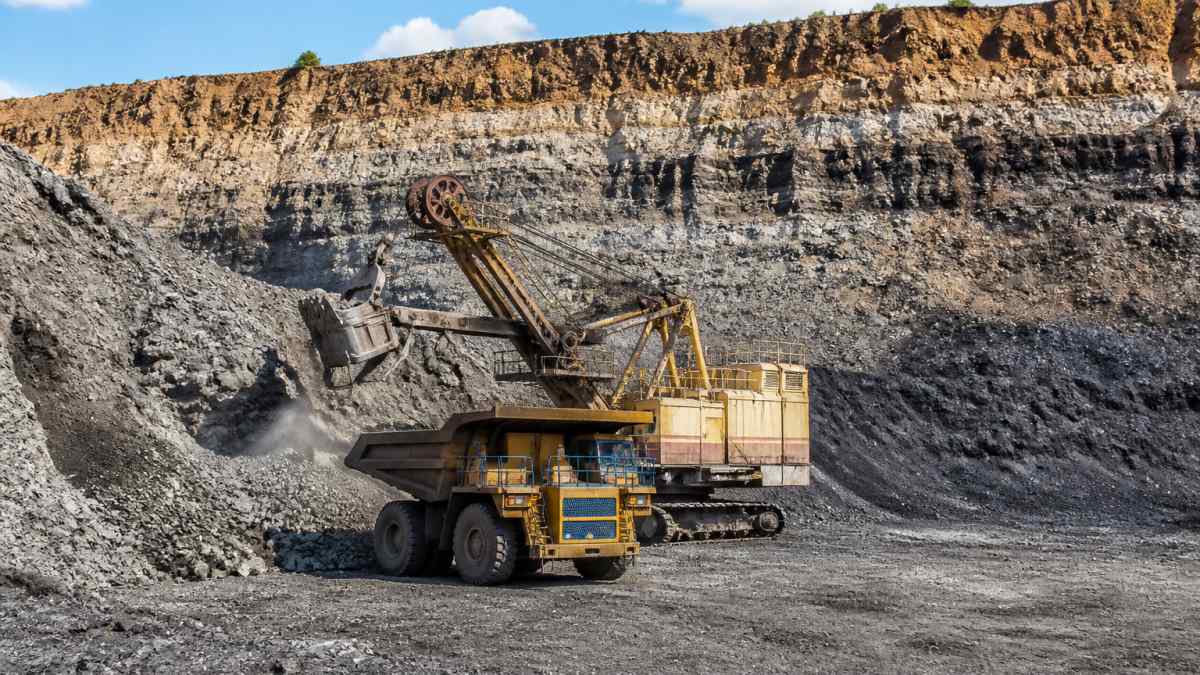
Proven Versus Probable Reserves
Proven reserves are ore deposits the company has drilled extensively and can extract with high confidence. These are near-term production. Probable reserves are deposits the company believes exist based on less drilling but reasonable geological evidence. They’re further out and carry more risk.
A company with only proven reserves might run out of ore in five years. A company with substantial probable reserves has a longer mine life and more upside if those probable reserves convert to proven status.
Read the reserve statements carefully. Some companies report resources (lower confidence) as if they were reserves (higher confidence). The difference matters. Resources might never become mineable.
Mine Life and Production Growth
Mine life is how many years the mine can operate at current production rates. A mine with 10 years of reserves is riskier than one with 20 years.
Production growth shows whether the company is finding more ore and increasing output. A company growing production year over year is reinvesting in exploration and development.
Look at reserve replacement ratio: new reserves added divided by production. A ratio above 100% means the company is replacing what it produces. Below 100% means reserves are being depleted faster than replaced.
Step 4: Analyze Valuation Methods and Multiples
You can’t just look at earnings. Gold mining stocks trade on different metrics than typical businesses. You need multiple approaches to value a mining company fairly.
Comparable Company Analysis
Comparable company analysis means finding similar mining companies and comparing their valuations. Look at companies with similar:
- Mine size and production
- Geographic location and jurisdiction risk
- Reserve life and quality
- Operating costs and profitability
Then compare valuation multiples like price-to-earnings (P/E) or enterprise value to EBITDA. If Company A trades at 12x EBITDA and Company B (with similar assets and risks) trades at 8x EBITDA, Company B might be undervalued.
Be careful with this approach. No two mines are truly identical. Differences in ore grade, permitting status, management quality, and geopolitical risk create valuation gaps that aren’t always obvious.
Net Asset Value Approach
Net asset value (NAV) is what the mine is worth if you liquidated all assets and paid all liabilities today. For mining companies, NAV includes:
- Present value of future cash flows from proven reserves
- Value of probable reserves (discounted for risk)
- Exploration upside (if any)
- Cash on hand minus debt
Calculate NAV per share by dividing total NAV by shares outstanding. If the stock trades below NAV per share, it might be undervalued. If it trades well above NAV, the market is betting on exploration success or production growth.
NAV calculations require assumptions about future gold prices, production costs, and discount rates. Small changes in these assumptions create big swings in NAV. Run multiple scenarios with different gold prices and cost assumptions.
The best mining stock valuations combine multiple methods. Use comparable company analysis to benchmark against peers, NAV to assess intrinsic value, and production growth to evaluate long-term sustainability. No single metric tells the whole story.
Step 5: Evaluate Gold-Price Sensitivity and Market Risk
Gold mining stocks are used bets on gold prices. When gold rises, mining profits soar. When gold falls, profits collapse. Understanding this use is critical.
A company with AISC of $1,400 per ounce makes $100 per ounce profit when gold trades at $1,500.
Click Here To Order Your Copy →
Companies with lower AISC have less use. They profit even when gold prices fall. Companies with high AISC are in danger when gold declines.
Look at historical gold prices and how the stock performed. Most mining stocks decline 20-30% when gold drops 10%. Some decline less because they have low costs.
Consider the gold price environment. Are we in a rising or falling gold cycle? What’s the consensus view on where prices are headed?
Step 6: Use a Gold Mining Stock Analysis Checklist
Create a systematic approach to evaluate gold mining stocks. Use this checklist to compare companies side by side.
| Metric | What to Look For | Why It Matters |
|---|---|---|
| AISC Trend | Declining or stable | Lower costs = higher profits |
| Reserve Life | 10+ years | Longer mine life = lower risk |
| Production Growth | Year-over-year increase | Shows reinvestment and expansion |
| Profit Margin | 30%+ of revenue | Shows operational efficiency |
| Debt Level | Low relative to assets | High debt increases financial risk |
| Gold Price Exposure | Clear correlation to gold | Understand use and risk |
| Management Track Record | Successful projects completed | Competent execution matters |
| Geographic Risk | Stable jurisdiction | Permitting and political risk vary |
Work through this checklist for each company you’re considering. Score each metric. Companies that score well across most categories are safer bets than those with mixed results.
Step 7: Assess Jurisdiction, Permits, and Management Quality
The best mining asset in the world is worthless if the government won’t let you operate it. Jurisdiction and permits determine whether the company can actually extract gold.
Geopolitical and Permitting Risk
Mines in stable countries with clear legal frameworks face lower risk than mines in countries with uncertain rules or political instability. A mine in Canada or Australia has different risk than a mine in an emerging market.
Check permitting status. Is the mine operating under current permits? Are there pending environmental reviews? Permitting delays cost money and create uncertainty.
Research local opposition. Some communities welcome mining for jobs and tax revenue. Others oppose it for environmental reasons. Community opposition can delay or block projects.
Look at historical permitting timelines. How long did it take to get permits? Are there legal challenges? A company that has navigated permitting successfully before is lower risk than one facing its first major challenge.
Management Track Record and Capital Allocation
Management quality often determines success or failure. Look at the company’s leadership track record.
Have they successfully operated mines before? Have they completed projects on budget and on schedule? Have they made smart capital allocation decisions?
Poor management can destroy shareholder value even with great assets. They overspend on projects, miss production targets, or make bad acquisitions. Good management maximizes value from the assets they have.
Check insider ownership. Managers who own significant shares are aligned with shareholders. Managers with minimal ownership might prioritize salary and perks over stock performance.
Review compensation structure. Stock-based compensation aligns management with shareholders. Cash-based compensation alone creates misalignment.
How to Evaluate Gold Mining Stocks: A Worked Example
Let’s walk through evaluating a hypothetical gold mining company using this framework.
Company: MineGold Inc.
Current Stock Price: $15 per share
Shares Outstanding: 50 million
Start with financials.
AISC was $1,400 per ounce ($420 million divided by 300,000 ounces). That’s reasonable for a mid-tier producer.
Reserves total 4.5 million ounces of proven reserves plus 2 million ounces of probable reserves.
The company trades at 4.5x trailing earnings ($15 divided by $3.30). Similar companies trade at 5-7x earnings.
Now assess risks. MineGold operates in a stable jurisdiction with solid permitting.
The main risk is gold price sensitivity.
Your conclusion: MineGold is a reasonable value if you believe gold prices will remain stable or rise.
Evaluating gold mining stocks requires patience and systematic analysis.
My Gold Book’s comprehensive guide explores how gold fits into your investment portfolio and helps you understand the factors that drive gold prices. Whether you’re building an investment thesis or simply curious about the gold market, understanding how to evaluate mining stocks gives you the tools to make informed decisions about this critical sector.
Frequently Asked Questions
What metrics should you use to evaluate gold mining stocks?
Focus on revenue, profitability, free cash flow, all-in sustaining costs (AISC), production levels, and proven reserves. Compare these metrics across peers using valuation multiples like price-to-earnings and enterprise value-to-production. Also assess gold-price sensitivity by analyzing how the company’s margins change at different gold prices. These metrics reveal whether a mining company can generate shareholder returns across commodity cycles.
How do you assess a gold mining company’s all-in sustaining costs?
All-in sustaining costs (AISC) measure the total cost to produce one ounce of gold, including mining, processing, and site maintenance. Compare AISC against the current gold price to determine profitability and cash generation. Lower AISC provides a larger margin of safety when gold prices fall. Request the company’s latest earnings report or investor presentation to find AISC per ounce, then benchmark it against direct competitors and the broader industry average.
How do gold prices affect mining company profits?
Gold mining companies have direct exposure to gold prices. When gold prices rise, revenue increases and margins expand, boosting profits. Conversely, falling gold prices compress margins and can turn operations unprofitable if the price drops below all-in sustaining costs. Evaluate each company’s sensitivity by calculating breakeven gold prices and modeling profit scenarios at different price levels. This reveals downside risk and helps you understand how much gold-price movement the stock can absorb.
What risks should investors consider before buying gold mining stocks?
Key risks include commodity price volatility, geopolitical and permitting uncertainty in mining jurisdictions, reserve depletion and mine life, management execution risk, and capital dilution from equity financing. Environmental and regulatory changes can delay projects or increase costs. Assess each company’s jurisdiction quality, proven management track record, and balance-sheet strength. Diversify across companies in stable regions with strong operating histories to reduce company-specific and geopolitical risk.