
Impact of Inflation on Gold Mining Stocks
Table of Contents
- How Inflation Drives Gold Mining Stock Performance
- The Relationship Between Gold Prices and Inflation
- Operating Costs in Gold Mining and Inflation Impact
- Gold Mining Stocks vs Physical Gold During Inflation
- Operational Use and Commodity Price Sensitivity
- Geopolitical Risk and Real Interest Rates
- Building a Diversified Portfolio with Mining Equities
- Conclusion
- Frequently Asked Questions
Last Updated: September 26, 2026
How Inflation Drives Gold Mining Stock Performance
When inflation rises, gold prices typically climb, but mining stocks don’t always follow. The real driver of mining stock performance during inflationary periods is operational use, the degree to which a mining company’s profits amplify when commodity prices move upward.
Here’s the critical insight: a gold mining company with stable operating costs sees its profit margins expand dramatically when gold prices rise. If a miner’s all-in sustaining costs run at $1,200 per ounce and gold trades at $1,500, the margin is $300. When inflation pushes gold to $2,000 per ounce while costs climb only modestly to $1,300, that margin expands to $700, more than doubling profit potential. This is operational use in action, and it’s why mining equities often outperform physical gold during inflationary environments.
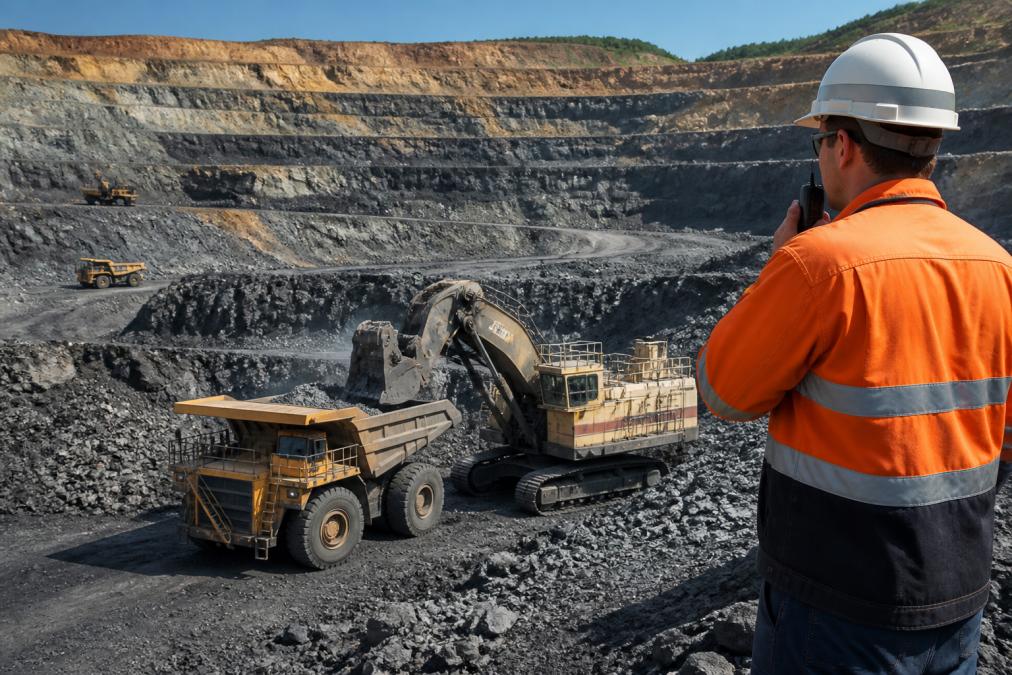
The impact of inflation on gold mining stocks depends heavily on cost structure. Companies with high debt loads or rising capital expenditure requirements face margin compression even as gold prices climb. Conversely, mature miners with paid-down debt and stable production can deliver outsized returns. This operational reality separates winners from losers during inflationary cycles.
Mining stocks amplify commodity price moves through use. A 10% rise in gold prices can translate to 20-30% profit growth for efficient operators. This use cuts both ways, price declines hurt proportionally more.
The Relationship Between Gold Prices and Inflation
Gold prices and inflation share a well-documented relationship, though it’s not perfectly correlated. When consumer price index readings accelerate, investors historically seek gold as an inflation hedge, driving up demand and prices. The mechanism is straightforward: as currency purchasing power erodes, hard assets like gold maintain relative value.
However, the relationship weakens when real interest rates rise sharply. Higher real rates increase the opportunity cost of holding non-yielding gold, suppressing prices even amid rising inflation.
According to Federal Reserve research on inflation dynamics, the correlation between inflation expectations and gold prices strengthens during periods of fiscal expansion and monetary accommodation. When central banks signal sustained low rates despite inflation, gold typically rallies.
The impact of inflation on gold mining stocks amplifies this relationship through commodity price sensitivity. Mining companies benefit disproportionately because their cost bases don’t rise dollar-for-dollar with inflation.
Gold acts as an inflation hedge, but mining stocks are the used play on that hedge. The operational structure of mining companies creates outsized returns when gold prices rise faster than operating costs.
Operating Costs in Gold Mining and Inflation Impact
Operating costs represent the single most important variable determining mining stock performance during inflationary periods. All-in sustaining costs (AISC) typically range between $1,000 and $1,400 per ounce, but this masks the inflation sensitivity of individual cost components.
Mining cost structures are not uniformly inflation-sensitive. Energy costs (20-35% of AISC) respond immediately to inflation, while labor costs (15-25%) adjust slowly through wage negotiations, and consumables (15-20%) face supply chain delays of 6-12 months. This asynchronous inflation pass-through creates temporary margin expansion windows during early inflationary cycles, before contracts reset.
A mine with $1,200 AISC sees energy costs spike 8-12% immediately during 5% inflation, while labor costs rise only 2-3% in year one due to existing contracts. Effective AISC climbs to only $1,240, creating a temporary $40-per-ounce advantage. When contracts reset in year two, AISC jumps to $1,290, compressing that advantage. Understanding this timing allows investors to position ahead of margin inflection points.
A miner with fixed-rate debt benefits from inflation as the real value of debt declines. Conversely, floating-rate debt indexed to SOFR faces immediate margin compression as rates rise. A $300 million floating-rate facility could see annual interest costs jump $15-20 million if the Federal Reserve raises rates 150 basis points, a direct hit to profitability that gold price appreciation cannot offset.
Mines in development or expansion phases face significant capex inflation. Equipment costs rise 5-10% annually during high-inflation environments. A mine budgeting $200 million for expansion might face $220-240 million actual costs, reducing free cash flow and pressuring valuations even as gold prices rise.
Mines in strong-currency jurisdictions (Canada, Australia) experience 2-3% inflation, while emerging-market mines face local inflation (4-6%) plus currency depreciation, creating 8-10% cost inflation. Since both sell gold in dollars, emerging-market operators face margin squeeze. Diversified producers often outperform single-jurisdiction peers.
The impact of inflation on gold mining stocks depends on management’s ability to control cost escalation. Operators that lock in multi-year energy contracts, maintain labor discipline, and prioritize capex discipline preserve margins. Those allowing costs to drift upward see valuations compress despite higher gold prices.
Gold Mining Stocks vs Physical Gold During Inflation
Physical gold is a direct inflation hedge that maintains purchasing power. Mining stocks are a leveraged bet on gold prices combined with operational execution.
During rapid inflation with rising gold prices, mining stocks often deliver multiples of physical gold’s returns because of operational use.
Click Here To Order Your Copy →
Physical gold exhibits lower volatility than mining equities. Mining stocks move with both gold prices and equity market sentiment, creating divergence. A mining stock might decline despite rising gold prices if investors worry about production challenges or debt refinancing.
Many investors hold both. Physical gold provides stability; mining stocks amplify returns during strong inflationary cycles. Optimal allocation depends on risk tolerance and time horizon.
Mining stocks suit investors seeking used exposure to gold price appreciation with higher risk tolerance. Physical gold suits conservative investors prioritizing capital preservation and direct inflation hedging.
Operational Use and Commodity Price Sensitivity
Operational use transforms gold price appreciation into outsized mining stock returns through fixed mining costs. When prices rise, fixed costs represent a smaller percentage of revenue, expanding margins dramatically.
Consider a simplified example: a mine with fixed costs of $400 per ounce and variable costs of $800 per ounce operates at $1,200 all-in sustaining costs. At $1,500 gold, profit is $300 per ounce. If gold rises to $2,000 while costs climb only to $1,250, profit jumps to $750 per ounce, a 150% increase from a 33% price move. This is operational use.
High-grade mines with concentrated ore bodies exhibit stronger use; low-grade mines show weaker use. Mature mines with paid-down capital exhibit stronger use than development-phase mines.
During downturns, operational use works in reverse. A 20% decline in gold prices can eliminate profits for marginal producers. Mining stocks exhibit higher volatility than gold itself.
The impact of inflation on gold mining stocks hinges on whether inflation translates to higher gold prices without proportional cost increases. This occurs during demand-driven inflation but breaks down during supply-shock inflation.
Geopolitical Risk and Real Interest Rates
Geopolitical risk and real interest rates operate as separate but reinforcing forces on mining stock valuations. While physical gold benefits uniformly from geopolitical instability, mining stocks face jurisdiction-specific risk premiums that can offset commodity price gains.
When geopolitical tensions rise, investors demand gold as a safe-haven asset, pushing prices higher. This benefits mining stocks through higher commodity prices. However, mining stocks simultaneously face operational risk premiums. A mine in a politically unstable region faces permit revocation, equipment delays, increased security costs, and nationalization risk, priced as a discount to intrinsic value.
When geopolitical tensions spike, gold prices might rise 5-10% on safe-haven demand, while a mining company with operations in that region sees its stock decline 15-25% as investors reprice operational risk.
Regime 1: Rising Geopolitical Risk + Negative Real Rates. Most favorable for mining stocks. Safe-haven demand pushes gold prices higher with no rate offset. Mining stocks rally sharply.
Building a Diversified Portfolio with Mining Equities
Mining equities should represent a satellite position within a broader precious metals allocation. Most investors benefit from limiting mining stocks to 5-15% of total portfolio value.
Mining stocks amplify losses during downturns as severely as they amplify gains. A 20% decline in gold prices can produce 40-50% losses in mining equities. Position sizing discipline prevents catastrophic drawdowns.
Conclusion
The impact of inflation on gold mining stocks operates through operational use, cost structure, and real interest rate dynamics rather than simple commodity price correlation. Mining stocks deliver outsized returns when gold prices rise faster than operating costs, a condition most likely during demand-driven inflation with accommodative monetary policy. Understanding the difference between physical gold, which preserves wealth, and mining stocks, which amplify returns through use, is essential for informed portfolio construction.
Frequently Asked Questions
Are gold mining stocks a reliable hedge against inflation?
Gold mining stocks can serve as an inflation hedge, but with more volatility than physical gold. Mining equities benefit from rising gold prices due to operational leverage, when gold prices climb while production costs remain relatively stable, profit margins expand significantly. However, mining stocks also track broader equity market sentiment and interest rate movements. For maximum inflation protection, many investors combine physical gold with a smaller allocation to mining stocks to capture both the stability of bullion and the amplified returns from operational leverage.
How do rising inflation and interest rates affect gold mining company profitability?
Inflation impacts mining profitability through two competing forces. Higher inflation typically boosts gold prices, which increases revenue per ounce produced. However, inflation also raises all-in sustaining costs, labor, energy, equipment, and debt servicing expenses climb. Real interest rates matter most: when inflation rises but interest rates stay low or negative in real terms, mining margins expand substantially. Conversely, if central banks raise rates aggressively to fight inflation, higher borrowing costs compress profit margins for leveraged miners. The net effect depends on the speed and magnitude of each change.
What is the key difference between gold mining stocks vs physical gold as inflation protection?
Physical gold provides direct commodity exposure and wealth preservation but generates no cash flow or earnings growth. Gold mining stocks offer operational leverage, a 10% rise in gold prices can drive 20-30% earnings growth at highly profitable mines due to fixed cost structures. Mining stocks also provide dividend income and capital appreciation potential. The trade-off: mining equities carry business risk (operational challenges, geopolitical disruptions, management decisions) and market correlation risk, while physical gold’s value depends primarily on inflation expectations and real interest rates. A balanced approach uses physical gold for stability and mining stocks for growth during inflationary cycles.
Why do gold mining stocks sometimes underperform when gold prices rise?
Mining stocks underperform gold prices when rising real interest rates offset commodity gains. When central banks aggressively raise rates to combat inflation, higher borrowing costs reduce mining company valuations even as gold prices climb. Additionally, mining stocks trade as equities and respond to broader market sentiment, risk appetite, and sector rotation. A spike in gold prices driven by geopolitical panic may benefit physical gold immediately, but mining stocks require time to reflect improved profitability. Supply chain constraints, labor shortages, or regulatory challenges can also cap mining stock gains despite rising gold prices. This countercyclicality highlights why mining stocks complement rather than replace physical bullion in a diversified portfolio.