
Independently Published Gold Guides: 2026 Review
Table of Contents
- What Makes an Independently Published Gold Guide Worth Your Money
- How to Spot Scams and Verify Author Credentials in Gold Investment Literature
- Best Books on Gold Investing: Our Top Picks
- Gold vs Bitcoin Investment Analysis: Which Guide Addresses Your Real Question
- Amplify Publishing Group Alternatives and Independent Publishers to Consider
- How to Evaluate Content Updates and Data Freshness in Gold Investment Guides
- Skill-Level Segmentation: Which Guide Fits Your Experience
- Conclusion
Last Updated: August 21, 2026
What Makes an Independently Published Gold Guide Worth Your Money
An independently published gold guide is a book or digital resource created outside traditional publishing houses, offering focused expertise on precious metals investing, collecting, or economic history. What separates worthwhile guides from the rest comes down to author credibility, content depth, update frequency, and how well the guide matches your knowledge level.
Good guides answer real questions, Is gold a hedge against inflation? Should I own physical bullion or gold stocks? How does gold compare to Bitcoin?, with evidence and nuance, not hype. The best independently published guides are written by researchers with genuine expertise, acknowledge limitations, provide actionable frameworks, and update content when market conditions shift. Guides promising guaranteed returns or positioning gold as a cure-all should raise immediate red flags.
At My Gold Book, we understand these concerns. Our guide, "GOLD: The Most Precious of Metals" by Douglas Ginter, tackles the core question many readers face: what role should gold actually play in your portfolio? The book explores gold’s history, supply-and-demand dynamics, and how it stacks up against modern alternatives like Bitcoin and silver.
How to Spot Scams and Verify Author Credentials in Gold Investment Literature
Not all independently published guides are legitimate. Some are written by people with zero investment experience, designed purely to extract money from curious readers. Others contain outdated information presented as current analysis.
Start by researching the author directly. Credible gold investment guide authors typically have published research in financial or commodity markets, experience in precious metals or investment banking, credentials like CFP (Certified Financial Planner), or a track record of accurate market commentary over multiple years (cfp.net). Douglas Ginter, author of "GOLD: The Most Precious of Metals," is a researcher focused on gold’s role in economics and history.
Check publication dates carefully. A guide published in 2015 discussing current gold market dynamics is suspect. Look for evidence that the author updates their work when significant changes occur. Independently published guides have an advantage over traditional books, they can be updated more frequently.
Review the table of contents before buying. Legitimate guides organize content logically: they define foundational concepts, explain different ownership methods, discuss risk factors, and provide decision frameworks. Guides jumping straight to "get rich quick" strategies or making absolute claims about gold’s future price are selling certainty in a market where none exists.
Scam guides often use urgency tactics (“Limited time offer,” “Act now before prices spike”) and make absolute predictions about gold’s future price. Legitimate guides discuss probability ranges and acknowledge that past performance doesn’t guarantee future results.
Look for external validation. Has the guide been reviewed by financial publications, cited by credible sources, or recommended by investment professionals? Verify that the author discloses potential conflicts of interest. A guide acknowledging "I own gold myself and believe in its value, but here are the legitimate reasons to be skeptical" is more trustworthy than one presenting only enthusiasm.
Best Books on Gold Investing: Our Top Picks

The gold investment book market includes several standout resources that have earned credibility through depth, clarity, and practical utility.
1. GOLD: The Most Precious of Metals by Douglas Ginter
This guide delivers a comprehensive exploration of gold’s role in history, economics, and modern portfolios. Rather than arguing you must own gold or should avoid it entirely, the book examines gold’s properties, historical significance, and practical investment considerations.
The book covers gold’s supply and demand dynamics, explores gold’s cultural and religious significance, and directly compares gold investing to Bitcoin and silver. You’ll understand what drives gold prices, how to think about ownership methods, and whether gold fits your situation.
Pros:
- Balanced assessment acknowledging both strengths and limitations of gold ownership
- Compares gold to Bitcoin and silver, addressing modern investment questions
- Explores gold’s historical, cultural, and religious significance
- Accessible writing style requiring no financial background
- Authored by a researcher with genuine expertise in precious metals economics
Cons:
- Specific pricing varies by retailer and format
2. Investing in Gold & Silver For Dummies by Paul Mladjenovic
Paul Mladjenovic, a Certified Financial Planner, wrote this guide specifically for people who’ve never invested in precious metals. The "For Dummies" format means no jargon and straightforward explanations of investment vehicles.
This guide excels at teaching the mechanics of gold ownership: the difference between buying physical bullion, gold ETFs, gold mining stocks, and options strategies. A section on identifying legitimate gold investments versus fraudulent schemes is valuable insurance against costly mistakes.
Pros:
- Written in accessible, jargon-free language
- Covers a broad range of investment vehicles and methods
- Authored by a certified financial planner with real credentials
- Includes practical guidance on avoiding scams
- Addresses portfolio diversification with precious metals
Cons:
- May not satisfy investors seeking advanced strategy analysis
- Pricing varies by retailer and format
3. The Goldwatcher: Demystifying Gold Investing by John Katz and Frank Holmes
Co-authored by John Katz and Frank Holmes, an award-winning fund manager, this book takes a deeper analytical approach for investors ready to move beyond "what is gold?" to "when should I buy gold and when should I avoid it?"
The book traces gold’s price history and places current market conditions in historical context. It distinguishes between bullion as a value investment and gold equities as a growth investment, a nuance many beginners miss.
Pros:
- Offers unbiased analysis of gold’s role in the global economy
- Includes insights from an award-winning fund manager
- Addresses both risks and rewards comprehensively
- Traces historical gold price movements to inform future expectations
- Distinguishes between different gold investment vehicles
Cons:
- Published in 2008, so some market examples are dated
- Pricing varies significantly across sellers
- May require more financial background than beginner guides
4. Guide to Investing in Gold & Silver by Michael Maloney
Michael Maloney’s guide approaches precious metals from the perspective of economic cycles and currency debasement. If you’re concerned about inflation eroding your savings or currency instability, this guide addresses those worries directly.
The book explains how to purchase physical gold and silver, including specific bullion coins and bars, and highlights ten common mistakes people make when investing in precious metals. The free eBook version makes this accessible to anyone curious without financial commitment.
Pros:
Click Here To Order Your Copy →
- Available as a free eBook, making it highly accessible
- Provides practical advice on purchasing and storing physical metals
- Offers historical perspective on economic cycles and precious metals performance
- Includes specific guidance on identifying quality bullion
Cons:
- Free eBook requires submitting personal information
- Some content reflects market conditions at initial publication (2008)
- May emphasize economic crisis scenarios more heavily than some readers prefer
Gold vs Bitcoin Investment Analysis: Which Guide Addresses Your Real Question
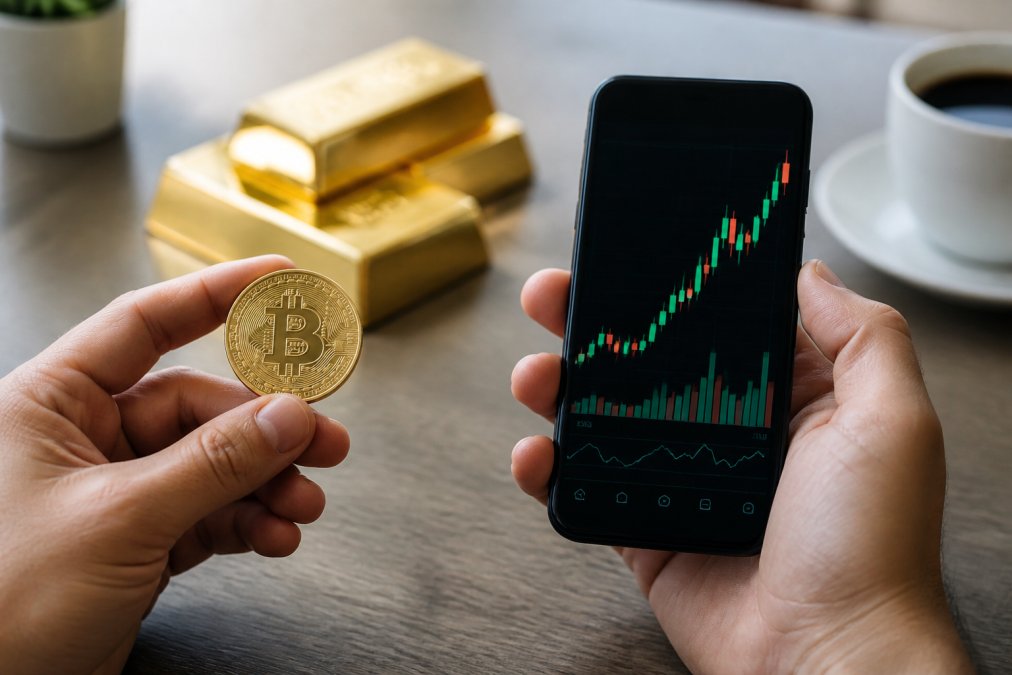
The comparison between gold and Bitcoin has become essential for modern investors. Gold offers tangible ownership, no counterparty risk, and a track record spanning centuries. Bitcoin offers digital portability, transparent supply limits (21 million coins maximum), and operates without government or institutional control (peer-reviewed research).
My Gold Book’s "GOLD: The Most Precious of Metals" directly addresses this comparison, examining Bitcoin’s characteristics and gold’s advantages alongside honest acknowledgment of Bitcoin’s appeal. Rather than dismissing cryptocurrency, the guide explores what Bitcoin does well and where gold’s longer history provides different value.
If you’re specifically interested in how Bitcoin and gold compare as inflation hedges, store-of-value assets, or portfolio diversifiers, look for guides that address this explicitly. Some guides written before Bitcoin’s mainstream adoption won’t cover this comparison.
When comparing gold and Bitcoin guides, check whether the author addresses both assets’ volatility. Gold typically experiences 10-20% annual price swings, while Bitcoin can move 30-50% or more ([peer-reviewed research](https://pmc.ncbi.nlm.nih.gov/articles/PMC7783506/)). A guide ignoring this difference isn’t giving you complete information.
Consider your actual concern. Are you worried about inflation eroding purchasing power? Both assets have historically provided some inflation protection. Are you seeking portfolio diversification? Both can fill that role, but in different ways.
Amplify Publishing Group Alternatives and Independent Publishers to Consider
Independent publishers and self-published authors now produce some of the most relevant and current guides. Independent publishers can update content more frequently than traditional publishing houses bound by print cycles. A guide self-published in 2025 can incorporate 2025 market data. A traditionally published guide from 2023 might contain outdated information by 2026.
However, traditional publishers provide editorial oversight and fact-checking that some independent guides lack. When evaluating alternatives to major publishers, look for verifiable author expertise, evidence of editorial review, cited sources for claims, and reviews by credible financial sources.
Many of the best gold investment guides today are independently published or published by smaller presses focused on investment education. This democratization of publishing means you can access specialized expertise that might not reach traditional publishing’s broader audience requirements.
How to Evaluate Content Updates and Data Freshness in Gold Investment Guides
A guide published in 2024 discussing gold’s role in modern portfolios is current. A guide from 2020 making claims about recent market trends is not. Check the author’s publication history. Do they publish new editions or update existing guides regularly? Look for specific data points and their dates. When the guide references gold prices, inflation rates, or market conditions, what year are those from?
Consider the guide’s core thesis. If it’s built on analysis of gold’s historical performance, older publication dates matter less. If it’s built on current market conditions or contemporary inflation concerns, freshness is critical.
The most reliable guides include publication dates on major claims, distinguish between historical analysis and current market commentary, and show evidence that the author updates content when conditions change significantly.
For guides available in multiple formats, check whether the author has released updated editions. An eBook can be updated more easily than a printed book.
Skill-Level Segmentation: Which Guide Fits Your Experience
Not every guide works for every reader.
Beginner investors benefit most from guides explaining foundational ideas without assuming background knowledge. "Investing in Gold & Silver For Dummies" by Paul Mladjenovic fits this category perfectly, avoiding advanced strategies and focusing on whether gold belongs in your situation.
Intermediate investors need guides going beyond "what is gold?" to "how does gold fit into my existing portfolio?" My Gold Book’s "GOLD: The Most Precious of Metals" works well here, providing balanced analysis without oversimplifying. These guides address multiple ownership methods, discuss risk factors honestly, and help you think through whether gold aligns with your investment goals.
Advanced investors benefit from guides offering deeper economic analysis and historical context. "The Goldwatcher: Demystifying Gold Investing" by John Katz and Frank Holmes appeals to this audience. These guides assume you understand basic investing concepts and want to deepen your understanding of gold’s specific role.
Match the guide to your actual experience level, not where you aspire to be.
Choosing an independently published gold guide requires evaluating author credentials, assessing content freshness, understanding your own experience level, and recognizing what specific questions you’re trying to answer. The guides reviewed here represent different approaches and audience levels, each legitimate in its own context.
My Gold Book’s "GOLD: The Most Precious of Metals" by Douglas Ginter stands out for readers seeking balanced perspective on gold’s role in modern portfolios, particularly those curious about gold’s historical significance and how it compares to alternatives like Bitcoin. The book provides clarity on fundamental questions about collecting and investing in gold without oversimplifying or overselling precious metals as a solution to every financial concern. Click Here To Order Your Copy and gain the balanced assessment that helps busy minds understand gold’s genuine value.
Frequently Asked Questions
What should I look for in a gold investment book?
Look for independently published gold guides that cover three core areas: market mechanics (how to buy, store, and sell gold), historical context (price trends and economic cycles), and honest risk assessment. Check whether the author distinguishes between bullion ownership and gold equities, and verify they address both inflation protection and portfolio diversification. Avoid guides that promise guaranteed returns or lack author credentials in finance or investing.
How do I know if an independently published gold guide is legitimate?
Verify the author's background in finance, investment, or economics through professional databases or published credentials. Legitimate guides acknowledge limitations and present balanced perspectives, they explain when gold may not be the right choice. Check whether the book cites historical data sources and distinguishes opinion from fact. Avoid publishers or authors who use pressure tactics, guarantee returns, or lack transparent publication history.
Are independently published gold guides reliable compared to traditional publishers?
Reliability depends on the author's expertise, not the publisher type. Independently published guides by credentialed researchers can be as valuable as traditionally published ones. The difference lies in editorial oversight and distribution reach. Independently published works may lack fact-checking infrastructure, so cross-reference claims with multiple sources. Focus on the author's background and the guide's methodology rather than assuming traditional publishers are automatically superior.
How does gold vs bitcoin investment analysis differ across guides?
Different guides prioritize these comparisons differently. Some treat gold as a hedge against currency debasement while viewing Bitcoin as speculative; others highlight Bitcoin's portability and gold's physical tangibility. The best guides acknowledge both assets serve different portfolio roles. Look for guides that explain the fundamental differences, gold's millennia of historical value versus Bitcoin's 15-year track record, rather than declaring one universally superior.
Should I buy a gold investment guide if I can find information online for free?
Free online sources often lack cohesive strategy, mix opinion with fact, and may be outdated. A well-researched independently published gold guide provides structured learning, vetted information, and strategic frameworks you won't assemble from scattered articles. The time saved and confidence gained from a comprehensive guide often justifies the cost, especially if you're making significant investment decisions. Consider guides that offer balanced perspectives and address your specific skill level.
This article was written using GrandRanker