
Understanding Book Distribution for Self-Published Authors
Last Updated: November 13, 2026
Quick Summary
Book distribution is the system that makes a book available to buy through retailers, libraries, and other sales channels, from the file you upload to the point a reader can search a title and order it. A listing is not the same as availability, so authors must confirm each title is orderable, not just uploaded.
- Distribution makes a title orderable; marketing gets readers to look for it.
- A book can be available, orderable, or stocked, and each state needs different work.
- Bookstore buyers check wholesale discount, returnability, metadata, and price before ordering.
- Print-on-demand prints each copy after an order, so you hold no inventory.
- Start with two channels, get them right, then expand to more.
Table of Contents
- Book Distribution Explained: From Upload to Orderable Listing
- Distribution vs. Marketing: Two Different Jobs
- The Chain: Publisher, Distributor, Aggregator, Retailer, Reader
- Amazon KDP: The Default Starting Point for Most Authors
- IngramSpark and the Wholesale Side of the Business
- Print-on-Demand Book Distribution: No Inventory, Lower Risk
- Ebook Distribution Platforms Beyond Amazon
- Bookstore Availability Is Not the Same as Bookstore Stocking
- A Step-by-Step Distribution Setup Checklist
- Choosing Your Distribution Mix Before You Upload
- Frequently Asked Questions
Book Distribution Explained: From Upload to Orderable Listing
Book distribution is the system that makes a book available to buy through retailers, libraries, and other sales channels, from the file you upload to the point a reader can search a title and order it.
The 2026 landscape gives authors more routes to readers than ever, yet most new authors still upload to one platform and assume the work is done.
Distribution vs. Marketing: Two Different Jobs
Distribution gets your book into catalogs and stores. Marketing gets readers to look for it. Confusing the two is a common mistake among new authors.
A distributor does not promote your title. It makes the title orderable. Retail buyers, library systems, and online shoppers find it through metadata, not advertising.
If you are still weighing publishing paths, our breakdown of independent publishing versus traditional publishing covers the trade-offs before you commit to a distribution route.
The Chain: Publisher, Distributor, Aggregator, Retailer, Reader
Every book sale passes through a chain, and each link takes a cut or adds a step. Knowing the chain helps you spot where your book can stall.
- Publisher: You, the self-published author, or a press holding the rights
- Distributor: Moves physical books to retailers and wholesalers
- Aggregator: Sends ebook files to many stores at once
- Retailer: Sells to the reader, online or in a store
- Reader: The final buyer
A common mistake is assuming one company handles every link. A gap at any link means a reader somewhere cannot order your book.
Amazon KDP: The Default Starting Point for Most Authors
Amazon KDP is a common starting point for self-published authors. But KDP is a retail channel first, and understanding what it does and does not do separates a book that sells on Amazon from one that is genuinely distributed.
How KDP Royalties and Printing Costs Actually Work
Amazon KDP’s royalty structure and printing costs are set by the platform and change over time, so authors should check the current terms directly before pricing a title.
Work backward instead of pricing by gut: decide the royalty per copy you need, add the printing cost, and set the list price from that number. The Amazon KDP help pages publish the current printing cost tables and royalty terms, and they change, so confirm them before you upload rather than trusting an old blog post.
What Expanded Distribution Adds, and What It Does Not
Expanded Distribution is a third-party platform option whose reach and terms should be checked against the platform’s current documentation before you rely on it.
Authors who want bookstore or library access often combine a retail platform with a wholesale-focused option.
IngramSpark and the Wholesale Side of the Business
IngramSpark is a self-publishing service that some authors use to reach bookstores and libraries.
Authors comparing platforms should check each one’s current wholesale and returns terms before choosing. A bookstore buyer checks the discount and whether the book is returnable before ordering. Set a thin discount or no returns, and many buyers will pass.
Platforms like this may involve setup costs and require print-ready files, so check their current requirements before uploading.
Print-on-Demand Book Distribution: No Inventory, Lower Risk
Print-on-demand book distribution means each copy is printed only after a reader orders it, so authors do not need to hold inventory.
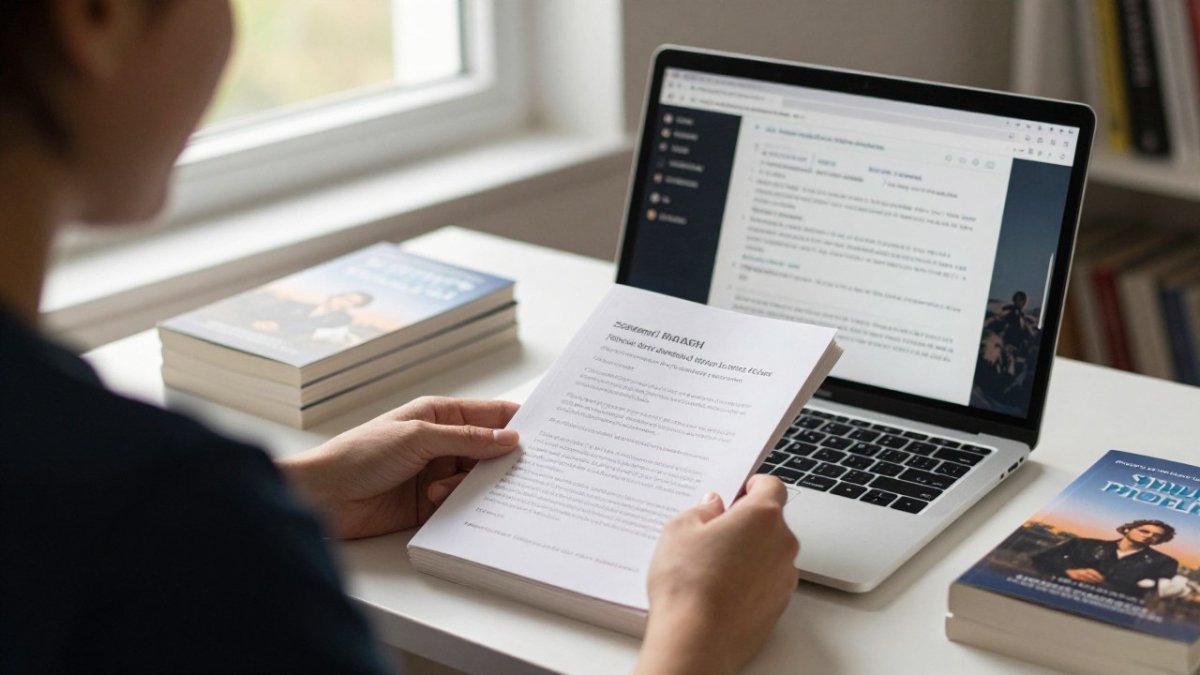
For most new authors, POD is the right first move, letting you test demand before spending on a print run. Per-copy printing is typically higher than bulk printing, which affects the margin per sale.
POD works best when:
- You are launching and unsure of demand
- You want no storage or shipping headaches
- You sell mostly online and at events in small batches
When Bulk or Offset Printing Makes Sense
Bulk or offset printing becomes worth it when you can move volume: high setup costs but a much lower per-copy price, so the math flips once you order in larger quantities.
Consider a print run when:
- You have steady direct sales or bulk buyers
- You speak or sell at events regularly
- A store or organization wants to order in quantity
The risk is real, though. Watch out: ordering a large print run before you have proven demand is how many authors end up with boxes of books in a garage. Prove the sales first, then print.
Ebook Distribution Platforms Beyond Amazon
Ebook distribution platforms let you sell digital editions outside Amazon, often through one upload, so you reach readers who never shop on Amazon.
Authors often compare several ebook distribution platforms, each with its own features and store reach.
Going wide means more reach but more listings to manage. Retail stores typically pull your metadata, so a typo in your description can spread across listings.
Bookstore Availability Is Not the Same as Bookstore Stocking
This is the distinction that trips up nearly every new author, and most guides stop at naming it. A book can be available to bookstores and still sit on zero shelves. The useful question is whether a store can order it, whether a buyer will choose to, and how you can verify both.
Available, Orderable, and Stocked: Three Different States
These are three separate conditions, and each requires different work:
- Available means your book exists in a distributor’s catalog with correct metadata, an ISBN, and a price. A store could find it if it looked.
- Orderable means a store can actually place an order through its normal wholesale account and receive copies at terms it can profit on. This depends on your wholesale discount, your returns policy, and whether the distributor feeds the store’s ordering system.
- Stocked means the store bought copies and put them on a shelf or table. This is a buying decision, not a listing outcome.
A book can be available but not orderable (thin discount, no returns), orderable but never stocked (no buyer interest, no local outreach), or stocked without being widely available (a store bought direct from you). Conflating these is why authors are surprised when a friend cannot find the book on a store shelf.
What Bookstore Buyers Actually Check
A bookstore buyer evaluating a self-published title looks at a short list before deciding whether to order:
- Wholesale discount. The discount must leave the store enough margin to cover its costs. A discount below that is a common reason to pass.
- Returnability. Many buyers expect the ability to return unsold copies. A non-returnable book is a harder sell because the store carries the risk.
- Metadata and cover. Correct title, subtitle, category, and a cover that reads well at thumbnail size. Errors here stop the order before terms are even considered.
- Price and format. A price that fits the section and a format the store stocks.
This is why the wholesale-first route matters: a distributor that feeds bookstore ordering systems lets you set the discount and returns policy that buyers check. A retail-first platform that does not expose those terms leaves you available but not reliably orderable.
How to Verify Your Book Is Actually Orderable
The practical test is to check the listing the way a store would. Search your title and ISBN in the distributor’s catalog and confirm the discount, returns status, and availability flag are correct. Then ask a local independent bookstore whether they can order it through their wholesaler, their answer tells you more than any dashboard. If they can order it but will not stock it, that is a buying decision you can influence with a direct pitch, a local angle, and terms that work for them.
A Step-by-Step Distribution Setup Checklist
Here is the order we would follow to set up distribution without wasted steps. Work through it top to bottom.
- Finish and proof the final manuscript and cover files
- Get an ISBN for each format (print and ebook need separate ones)
- Write your metadata: title, subtitle, description, keywords, categories
- Set your list price and work backward to your royalty
- Choose your print route: POD first, bulk later
- Upload to Amazon KDP for retail reach
- Upload to IngramSpark for wholesale and library reach
- Add an ebook aggregator for wide digital stores
- Set wholesale discount and returns policy for trade buyers
- Order a proof copy and check the print quality
- Confirm each listing is live and orderable, not just uploaded
- Record every channel and login in one tracking sheet
That last step saves hours later. Channels change terms, and you will want one place to check.
Choosing Your Distribution Mix Before You Upload
Your distribution mix should follow your goals, not the other way around. Pick channels based on who you want to reach and how you want to sell.
| Author Goal | Best Channel Mix | Why |
|---|---|---|
| Fast launch, online sales | Amazon KDP only | Free, simple, biggest retail reach |
| Bookstore and library reach | KDP plus IngramSpark | Covers retail and wholesale |
| Wide ebook sales | KDP plus an aggregator | Reaches non-Amazon readers |
| Events and bulk sales | POD plus a later print run | Low risk first, lower cost at volume |
| Maximum reach | KDP, IngramSpark, aggregator | Broadest coverage, most admin |
Before you finalize your plan, it helps to know the costs that hide in some routes. Our guide to the hidden costs of hybrid book publishing covers fees that can change your budget. If you are comparing publishing partners side by side, our look at hybrid publishing alternatives puts the options in one place.
Watch out: chasing every channel at once spreads your metadata thin and multiplies errors. Start with two, get them right, then expand.
Distribution is the machinery behind every sale.
Getting a book into readers’ hands takes patience and the right channels. The same is true of understanding an investment.
Frequently Asked Questions
How do you distribute your self-published book?
You upload your files to a platform that sends them to retailers. Authors commonly use a retail platform such as Amazon KDP, a wholesale-focused option, and ebook distribution platforms to reach different stores. Most authors use two or three channels: KDP for Amazon, IngramSpark for trade reach, and an aggregator for Apple Books, Barnes & Noble, and Kobo. Set your metadata, ISBN, wholesale discount, and returns policy before publishing, then confirm each listing is live and orderable.
What is the difference between book distribution and book marketing?
Book distribution makes your title available to buy; marketing makes readers aware it exists. A distributor or aggregator handles the sales channel, the listing, and fulfillment. Marketing covers reviews, ads, email, events, and social media. You can have perfect distribution and still sell almost nothing without marketing, and strong marketing cannot fix a listing that is not orderable. Treat them as separate jobs with separate budgets, and check your distribution setup before spending on promotion.
Can self-published books be ordered by bookstores and libraries?
Yes, but ordering and stocking are different things. A bookstore can order your book if it appears in a wholesaler catalog with a standard trade discount, a returns policy, and accurate metadata. Whether staff choose to stock it on a shelf is a separate decision based on local demand, cover appeal, and reviews. Libraries often respond to patron requests, so readers can ask their library to consider your title.
Should self-published authors use Amazon KDP or IngramSpark?
Most authors use both, because they serve different channels. Amazon KDP is a common retail starting point, and wholesale-focused platforms can help with trade and library access. Check each platform’s current terms before choosing. Keep your ISBN and metadata consistent across both so retailers see one clean record. If you must pick one first, start with KDP for reach, then add IngramSpark when you want trade and library access.
