
Where to Buy Small Amounts of Physical Gold in 2026
Table of Contents
- Where to Buy Small Amounts of Physical Gold: Quick Comparison
- Online Bullion Dealers vs. Local Coin Shops
- What to Check Before You Buy Small Gold
- Fractional Gold Coins: The Easiest Entry Point
- Gold Bullion Premiums: Why Small Weights Cost More
- How to Store Physical Gold Safely
- Budget-Friendly Gold Accumulation Strategies
- Frequently Asked Questions
Last Updated: September 11, 2026
Where to Buy Small Amounts of Physical Gold: Quick Comparison
The best places to buy small amounts of physical gold are established online bullion dealers and local coin shops, and the right choice depends on how much you value convenience versus in-person inspection. This guide from My Gold Book breaks down where to buy small amounts of physical gold without overpaying on premiums, shipping, or storage. Small purchases carry a hidden cost that large bars do not, and understanding that gap is the difference between a smart entry point and an expensive one.
Below, we compare the two main channels, explain how to verify what you receive, and show how to accumulate gold on a modest budget.
Online Bullion Dealers vs. Local Coin Shops
Online bullion dealers ship to your door and typically offer wider inventory and lower per-unit premiums at volume. Local coin shops let you inspect coins in person and walk out with metal in hand the same day, but selection is limited to what the owner stocks.
The trade-off comes down to price transparency versus immediacy. Online dealers publish live pricing tied to the spot price, while a local shop sets its own dealer markup and may negotiate.
| Factor | Online Bullion Dealers | Local Coin Shops |
|---|---|---|
| Selection | Wide, including fractional gold | Limited to current stock |
| Pricing | Published, tied to spot price | Negotiable, varies by shop |
| Premiums | Lower on larger orders | Often higher per coin |
| Inspection | After delivery | Before you pay |
| Shipping | Insured shipping available | None, you carry it home |
| Best for | Buyers seeking specific coins | Buyers wanting same-day metal |
What to Check Before You Buy Small Gold
Verify the dealer’s reputation and the coin’s authenticity before money changes hands. Reputable sellers provide an assay card or certificate of authenticity with each piece, and they stand behind a buyback program.
Authentication and Counterfeit Protection
Fineness is the proportion of pure gold in a piece, expressed as a decimal or in karats. A coin marked .9999 is 99.99% pure, while 22-karat sovereign coins like the American Eagle contain alloy for durability (usmint.gov).
For beginners, counterfeit detection starts with three checks:
- Weigh the coin against its official specification
- Measure its diameter with calipers
- Confirm the mint mark and edge lettering match the genuine issue
Skipping the weight and diameter check is the most common beginner mistake. A gold-plated tungsten fake can pass a visual inspection but fails a simple scale test every time.
Insured Shipping and Physical Delivery
Insured shipping protects your purchase in transit and is standard among established dealers. Confirm the shipment requires a signature and that the declared value matches what you paid. If a dealer will not insure a small order, that is a signal to buy elsewhere.
Fractional Gold Coins: The Easiest Entry Point
Fractional gold coins are the simplest way to start, because they let you buy physical gold in small, affordable weight denominations rather than committing to a full troy ounce. Popular fractional sizes include 1/10 oz, 1/4 oz, and 1/2 oz, alongside sovereign coins such as the American Eagle fractionals.
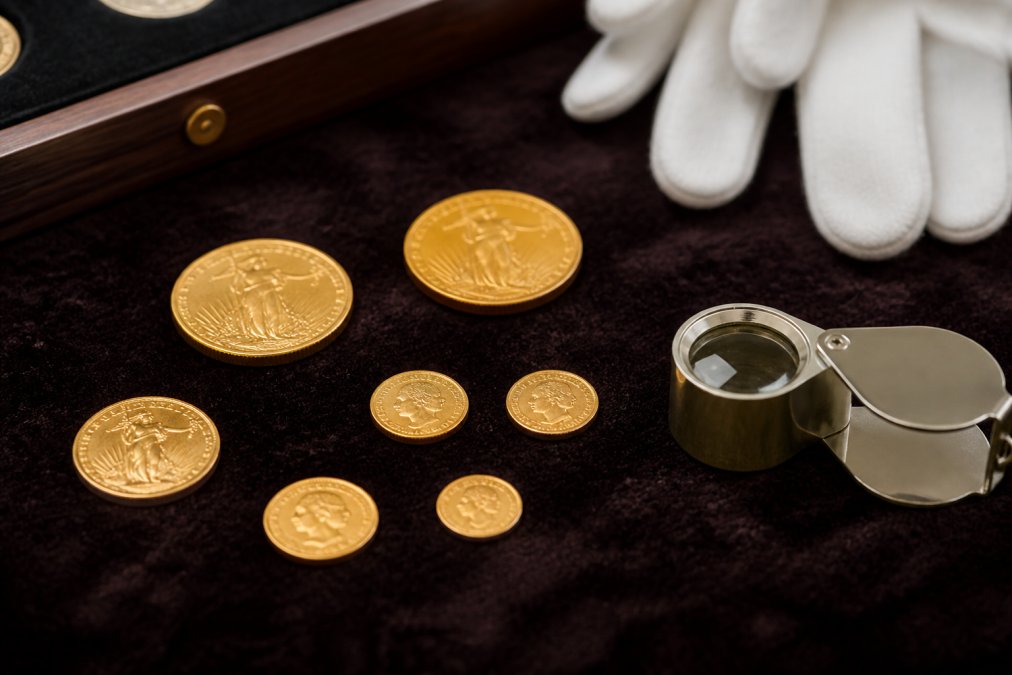
Popular Fractional Sizes and Sovereign Coins
The 1/10 oz American Eagle is a common first purchase for new buyers because it is widely recognized and easy to resell. Sovereign coins carry government backing, which supports liquidity and makes authentication simpler than with private minted bars.
Gold Bullion Premiums: Why Small Weights Cost More
Gold bullion premiums are the amount a dealer charges above the spot price, and they are highest on the smallest weights. This is the single most important concept for anyone buying small amounts of physical gold, and it is the part most buying guides skip entirely.
The Premium Trap for Small Denominations
The premium is not a flat dollar add-on. It is a percentage of the metal’s value, and that percentage climbs sharply as the weight drops. A 1 oz coin might carry a premium in the low single digits over spot, while a 1/10 oz coin from the same mint can carry a premium several times larger as a share of its gold content. A 1 gram bar is worse still.
The practical consequence: the smaller the piece, the more of every dollar you spend goes to the dealer’s markup and the less goes to actual gold. If you buy ten 1/10 oz coins instead of one 1 oz coin, you may pay meaningfully more for the same total weight of metal.
How to Compare Premiums the Right Way
Ignore the sticker price. Compare the premium as a percentage of spot price, per gram of gold. The formula is simple:
- Find the spot price per troy ounce (31.1035 grams).
- Divide the coin’s price by its gold weight in grams to get your cost per gram.
- Subtract the spot price per gram. The difference, divided by the spot price per gram, is your premium percentage.
A coin that looks cheap per unit can be the most expensive per gram of gold. Run this calculation on every fractional size before you commit.
If your goal is pure metal accumulation, compare the premium as a percentage of spot price, not the dollar figure. A coin that looks cheap per unit can be the most expensive per gram of gold.
When Paying a Higher Premium Makes Sense
A higher percentage premium is not automatically a bad deal. Fractional coins and sovereign issues often carry a numismatic or collector premium on top of the metal premium, and that premium can hold or grow when you resell. A 1/10 oz American Eagle, for example, is widely recognized and liquid, so its higher premium is partly a convenience and resale tax you can recover. A generic 1 gram bar from an unknown private mint carries a high premium with no offsetting recognition.
The rule of thumb: pay up for recognition and government backing, not for novelty packaging or commemorative designs you cannot easily resell.
Premiums vs. Shipping on Small Orders
On a single small purchase, fixed shipping and insurance costs can exceed the metal premium itself. A $15 shipping charge on a $200 order is effectively a 7.5% surcharge on top of whatever premium you already paid (consumer.ftc.gov). This is why small buyers should batch orders or look for dealers that waive shipping above a threshold, and why the per-gram cost of a single tiny purchase is almost always worse than the per-gram cost of a slightly larger one.
How to Store Physical Gold Safely
How you store physical gold depends on how much you hold and how often you need access. For small holdings, the storage decision is really a resale-liquidity decision: where your gold lives determines how easily and cheaply you can turn it back into cash.
Home Storage vs. Secure Vaulting
A home safe bolted to the floor and a discreet location work well for small holdings. As your collection grows, a third-party vaulting service with insured, segregated storage becomes worth the fee. Either way, keep your purchase records and assay cards separate from the metal itself.
For small amounts, home storage usually wins on cost. Vaulting fees are typically charged as a percentage of value with a minimum annual charge, and on a small holding that minimum can eat a meaningful share of your position. Run the math before you pay to store a few hundred dollars of gold.
Local vs. Online Liquidity: Where You Store Determines How You Sell
This is the trade-off most guides never mention. Gold you bought online is easiest to sell back online, and gold you bought locally is easiest to sell locally. Crossing channels adds friction.
- Selling back to an online dealer. Most established dealers run a buyback program, but you ship the metal back, wait for inspection, and accept the dealer’s buy price, which is typically below spot. You also pay for insured shipping unless the dealer covers it.
- Selling to a local coin shop. You walk in, get an offer on the spot, and walk out with cash the same day. The trade-off is that the shop’s buy price is its own, and small pieces often get a wider spread than full ounces.
- Selling peer to peer. Private sales can capture a better price on recognizable sovereign coins, but you carry the authentication and safety risk yourself.
A common pattern is to buy where you can most easily sell. If you have a reputable local shop nearby, buying there builds a relationship that pays off at resale. If you buy online, stick with a dealer that publishes a clear buyback policy and honors it on small orders.
Practical Storage for Small Holdings
- Keep pieces in their original packaging. Assay cards and mint capsules protect the coin and support authentication at resale.
- Separate records from metal. Store invoices, assay cards, and serial numbers somewhere other than the safe.
- Insure the right amount. A standard homeowner’s or renter’s policy may cap coverage for precious metals, so confirm the limit or add a rider (iii.org).
- Do not over-secure a small position. A bolted safe and a discreet location are enough for most small holdings; a bank safe deposit box is another option, though access hours and box availability vary.
For small amounts of gold, storage and liquidity are the same decision. Store it where you can most easily and cheaply sell it, and keep the paperwork that proves what it is.
Budget-Friendly Gold Accumulation Strategies
The most effective approach for small budgets is to buy consistently rather than in one large lump. A common approach is setting a fixed monthly amount and buying the largest fractional coin that amount allows, which gradually reduces your average premium.
Other strategies that work:
- Save for larger fractions. Skipping 1/10 oz coins in favor of 1/4 oz cuts your premium per gram.
- Watch for dealer sales. Many dealers discount premiums on select coins, which narrows the small-weight penalty.
- Buy sovereign coins over private bars. Government-minted coins resell more easily when you need liquidity.
For buyers weighing gold against modern alternatives, My Gold Book’s title GOLD: The Most Precious of Metals offers a balanced comparison of gold, silver, and Bitcoin, which helps put these accumulation decisions in context.
Small gold purchases reward patience. Buying the largest fractional coin your budget allows, on a steady schedule, beats chasing the lowest single-unit price.
Frequently Asked Questions
What’s the smallest piece of physical gold I can buy?
The smallest commonly available gold pieces are 1/20 troy ounce coins and 0.5 gram minted bars. Some dealers sell 1 gram bars and 1/10 troy ounce coins, which are popular starting points. Fractional gold coins like the 1/10 oz American Gold Eagle give you a recognizable, sovereign-minted option. Keep in mind that smaller weights carry higher gold bullion premiums per ounce, so a 1/10 oz coin costs proportionally more than a 1 oz coin.
Are fractional gold coins a good investment?
Fractional gold coins offer flexibility and lower upfront cost, which makes them useful for gradual accumulation. The trade-off is a higher premium per troy ounce compared to full-size coins. For investors focused purely on lowest cost per ounce, 1 oz coins are more efficient. For beginners building a position slowly or wanting small denominations for easy resale, fractional gold coins can still make sense. Match the size to your budget and liquidity needs.
How do premiums work when buying small amounts of gold?
The premium is the amount above the spot price you pay to acquire physical gold. It covers dealer markup, minting, shipping, and handling. Small weights carry higher premiums because fixed costs are spread across fewer ounces. A 1/10 oz coin might carry a 15-20% premium while a 1 oz coin might carry 4-8%. Always compare the total premium, not just the headline price, when evaluating where to buy small amounts of physical gold.
Where is the cheapest place to buy physical gold?
Online bullion dealers often have lower premiums than local coin shops because they operate at higher volume and lower overhead. However, you must factor in insured shipping costs, which can erase savings on very small orders. Local coin shops let you inspect the gold in person and avoid shipping fees, but their buyback spread may be wider. Compare total cost including shipping and any storage fees before deciding.
Buying small amounts of physical gold is straightforward once you understand the premium trade-off and know what to verify before you pay. My Gold Book answers the questions that trip up new buyers, covering the history and supply of gold, how inflation affects its value, and an honest comparison against Bitcoin and silver. If you want clarity on whether to own gold and how to start, order your copy of GOLD: The Most Precious of Metals and make your next purchase with confidence.