
Why Gold Still Matters in the Digital Age: 2026 Guide
Table of Contents
- The Enduring Value of a Tangible Asset in a Digital World
- Is Gold a Good Inflation Hedge in 2026?
- Gold vs Bitcoin for Long Term Investment: A Balanced Comparison
- The Benefits of Gold in a Diversified Portfolio
- Gold in Technology: Why Electronics Still Rely on Precious Metals
- CBDCs, Cybersecurity Risks, and the Case for Physical Bullion
- Why Gold Is Still Relevant in the Digital Age: A Final Assessment
- Conclusion
- Frequently Asked Questions
Last Updated: September 18, 2026
The Enduring Value of a Tangible Asset in a Digital World
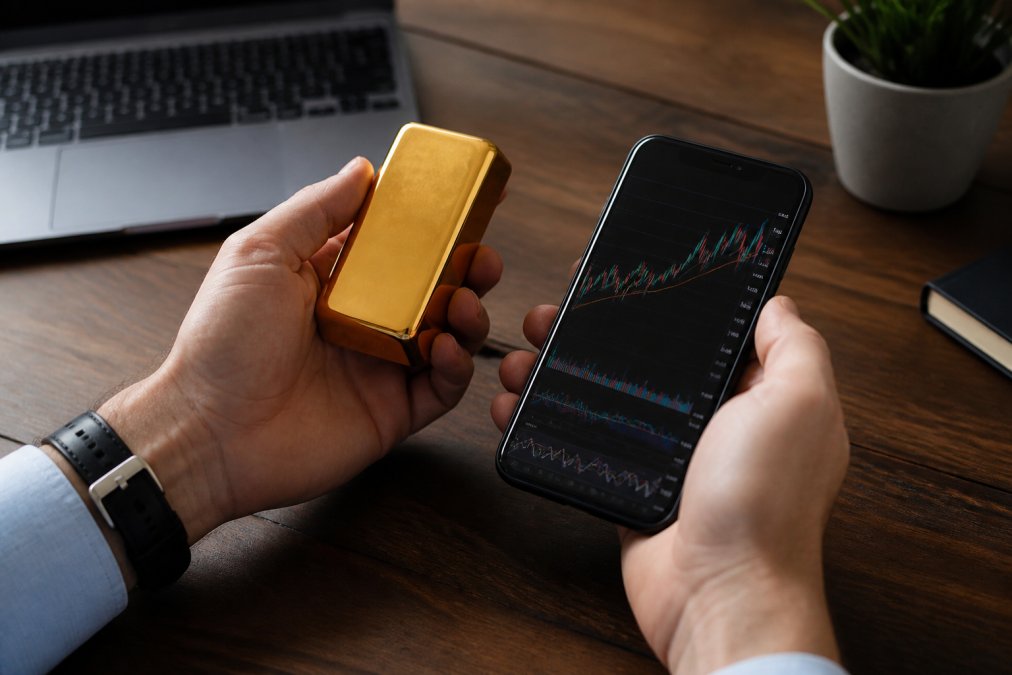
Gold remains relevant in the gold digital age because it is a physical store of value that no server, bank, or government can freeze, delete, or inflate away. We see this question constantly: why does a metal dug from the ground still matter when money moves as data? Because gold is a tangible asset with finite supply and no counterparty risk.
Digital convenience has a hidden cost. Every digital asset depends on infrastructure, power grids, exchanges, custodians, and each layer introduces exposure. Physical bullion carries none of that.
Below, we break down the inflation case, the gold versus Bitcoin debate, and why electronics manufacturers still depend on precious metals. Gold’s relevance did not shrink in the digital age, the digital age just made its differences more obvious.
Is Gold a Good Inflation Hedge in 2026?
Gold has historically served as an inflation hedge, though the relationship is uneven over short timeframes. Over long horizons it tends to track and often exceed consumer price rises, which is why investors treat it as a safe-haven asset during monetary expansion.
The nuance matters. Gold pays no interest or dividends, so it competes poorly against high-yield bonds in calm markets.
How Gold Responds to Monetary Policy and Economic Uncertainty
Central bank policy drives gold’s short-term price more than inflation data. Rate cuts and quantitative easing lower the opportunity cost of holding a non-yielding asset, supporting the spot price; rate hikes do the opposite.
Gold vs Bitcoin for Long Term Investment: A Balanced Comparison
Gold and Bitcoin both appeal to investors seeking alternatives to fiat currency, but they differ sharply in volatility, liquidity, market infrastructure, and what backs their value. Gold is the older, lower-volatility option with deep, regulated markets and a physical settlement layer. Bitcoin offers higher potential returns with higher risk and a value proposition resting entirely on network consensus.
| Factor | Gold | Bitcoin |
|---|---|---|
| Volatility | Lower, decades of price history | High, sharp drawdowns |
| Tangibility | Physical, holdable | Digital only |
| Liquidity | Deep global market | Strong but exchange-dependent |
| Counterparty risk | Minimal | Custody and exchange risk |
| Regulatory clarity | Long-established | Still evolving |
| Supply mechanism | Mining, roughly 1.5-2% annual growth | Programmatic issuance halving roughly every four years |
| Settlement | Physical delivery available | On-chain or exchange ledger only |
| Demand base | Investment, jewelry, central banks, industry | Investment and payments adoption |
Volatility, Liquidity, and Market Infrastructure
Market volatility is where the two diverge most. Gold’s price swings are measured in single-digit percentages over months; Bitcoin can move that much in a day. That gap is not a knock on Bitcoin’s upside, a store of value needs to hold purchasing power through a crisis, not just appreciate over a decade.
Supply, Scarcity, and the Halving Narrative
Both assets are marketed as scarce, but the scarcity works differently. Gold’s above-ground stock grows slowly, new mine supply is roughly 1.5-2% of the existing stock each year, and never disappears. Almost all gold ever mined still exists, so price is set by the marginal buyer against a very deep pool of metal.
Custody, Counterparty, and Failure Modes
This is where the comparison gets practical. Gold can be held at home, in a bank vault, or with a third-party depository, each with a known cost and failure mode. Bitcoin can be self-custodied, held on an exchange, or wrapped into a fund, and each option introduces failure modes that did not exist before the asset did: lost seed phrases, exchange insolvency, smart-contract bugs, and network congestion when you most want to move.
A common mistake is treating Bitcoin and gold as interchangeable “alternative assets.” They serve different roles. Bitcoin is a growth-oriented bet on adoption. Gold is risk mitigation. Mixing them up in your asset allocation leads to portfolios that are either too volatile or too conservative for your actual goals.
Correlation: What Each Asset Does When It Matters
The final piece is correlation. Gold’s historical correlation to equities is low and often turns negative during stress, exactly when diversification pays off. Bitcoin’s correlation to equities has been unstable, sometimes near zero, sometimes tracking the Nasdaq during risk-off episodes. For a defensive sleeve, an asset whose correlation spikes when you need it to fall is not doing the job.
The Benefits of Gold in a Diversified Portfolio
Gold improves portfolio diversification because it moves independently of stocks and bonds in periods of stress. When equities fall on recession fears, gold often holds or rises, reducing overall portfolio swings.
- Risk mitigation: Gold cushions drawdowns when equities and credit markets fall together.
- Wealth preservation: Physical bullion protects purchasing power across generations.
- Liquidity: Gold converts to cash quickly in established markets.
- No counterparty: Ownership does not depend on any institution’s solvency.
Gold in Technology: Why Electronics Still Rely on Precious Metals
Gold is essential in modern electronics because of two properties no substitute matches well: corrosion resistance and electronic conductivity. Every smartphone, laptop, and server contains small amounts of gold in its connectors and circuitry.
When you evaluate gold as an investment, remember that its industrial demand is not a side note. Roughly a meaningful share of annual gold consumption goes to electronics and other industrial uses, which means the metal has a consumption base independent of investor sentiment. That is a stabilizing force most digital assets lack.
CBDCs, Cybersecurity Risks, and the Case for Physical Bullion
Central Bank Digital Currencies (CBDCs) are government-issued digital currencies that give central banks direct control over how money is used, programmed, and tracked. That control is why physical bullion has gained renewed attention among privacy-conscious investors, the most under-covered angle in the gold-versus-digital debate.
Why CBDCs Could Increase Demand for Non-Sovereign Assets
The conventional view is that CBDCs threaten gold by making digital payments more efficient. The more useful view is the opposite. A CBDC is by definition a sovereign liability, a direct claim on a central bank, fully within its control. Gold is nobody’s liability, sitting outside the sovereign balance sheet entirely.
Cybersecurity Risks Across the Digital Stack
Cybersecurity risks compound the concern. Every digital asset, bank deposits, crypto, a future CBDC, depends on systems that can be breached, misconfigured, or shut down. The attack surface spans the identity layer, payment rails, exchange, custodian, and the device in your hand; each is a place where access can be denied or credentials compromised.
The Environmental Comparison, Stated Honestly
The environmental angle deserves honesty too. Gold mining carries real costs, land disturbance, water use, and in some operations mercury and cyanide handling, and so does Bitcoin mining, which consumes electricity continuously to secure the network. Neither is free.
Custody and Storage for the Digital-Native Generation
Costs vary by model. Home storage is cheapest but carries insurance and theft exposure. Vaulted depositories charge ongoing storage and sometimes insurance fees, and they typically require minimum holdings. The right answer depends on how much you hold and how much access you want. What matters is that the choice is deliberate rather than defaulted.
The strongest argument for physical bullion in the digital age is not returns. It is optionality. Gold gives you an asset that exists outside every digital system, which matters most in the scenarios where digital systems fail, and CBDCs make that optionality more valuable, not less.
Why Gold Is Still Relevant in the Digital Age: A Final Assessment
Gold’s relevance in the gold digital age rests on three things digital assets cannot replicate: tangibility, no counterparty, and a dual demand base spanning investment and industry. Those are not nostalgic virtues but structural advantages that become more valuable as more of the financial system moves online.
Conclusion
Deciding how much of your portfolio belongs in physical assets is harder than ever when digital options multiply by the month. My Gold Book answers that question with research rather than hype, covering gold’s history and supply and demand, comparing it honestly against Bitcoin, and explaining how inflation affects the metal without a sales pitch. If you want clarity on whether to own gold and why it still matters, get your copy and start with the facts.
Frequently Asked Questions
What if I invested $10,000 in gold 20 years ago?
A $10,000 investment in gold 20 years ago would have grown based on the spot price appreciation over that period. While past performance does not guarantee future results, gold has historically maintained its purchasing power better than fiat currency. The exact return depends on the entry price and current market volatility. For a detailed historical breakdown, a resource like My Gold Book provides context on long-term performance.
Why is Warren Buffett against gold?
Warren Buffett has famously criticized gold because it does not generate income, dividends, or earnings. He prefers productive assets like stocks or real estate. However, this view focuses on growth rather than wealth preservation. For investors focused on risk mitigation and portfolio diversification during economic uncertainty, gold’s lack of yield is often seen as a trade-off for its role as a safe-haven asset.
Does Gen Z prefer gold or silver?
Recent trends show that younger investors, including Gen Z, are increasingly interested in precious metals as a tangible alternative to digital assets. While silver is popular for its lower entry price, gold remains the preferred store of value for those seeking long-term stability. Many in this demographic are exploring physical bullion to hedge against market volatility and sovereign risk.
How does gold act as a hedge against inflation?
Gold acts as a hedge against inflation because its supply is finite and its intrinsic value is not tied to any government’s monetary policy. When fiat currency loses purchasing power due to inflation, gold prices often rise. This inverse relationship helps protect wealth preservation during periods of economic uncertainty, making it a key component of many asset allocation strategies.
Gold’s role in a modern portfolio is a judgment call, and judgment improves with better information. My Gold Book offers a balanced, research-driven guide that covers gold’s history, its economic role, its industrial uses, and how it stacks up against digital alternatives. The book explains how inflation affects gold, lays out the major uses of the metal, and gives you the context to decide for yourself. Click Here To Order Your Copy and make your next decision with the full picture in hand.